

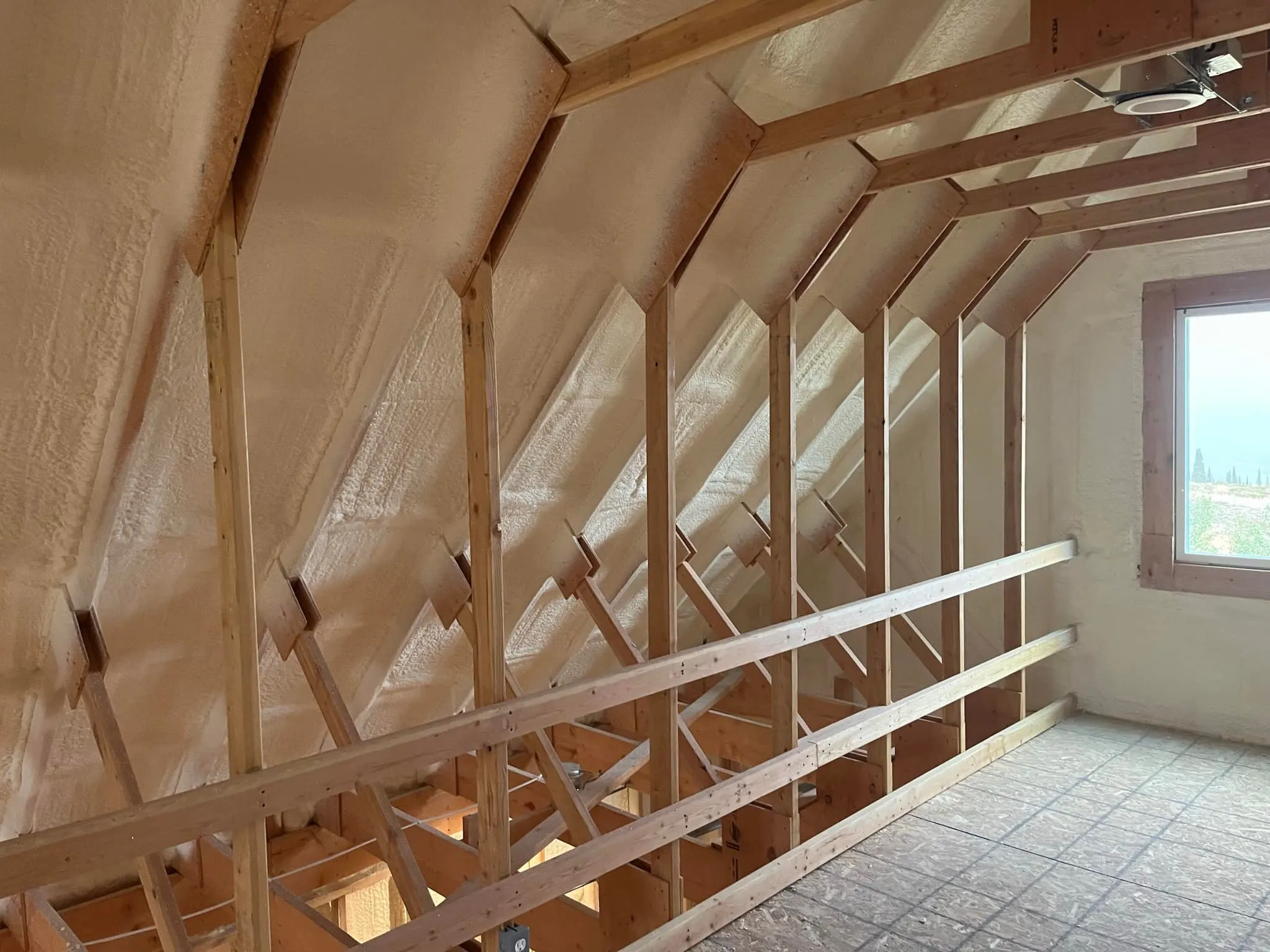
Picture a January night when wind howls down from Teton Pass, your furnace runs nonstop, and the floors still feel like ice. High Country Solutions changes that with advanced closed-cell spray foam insulation in Victor, ID, sealing every gap so warmth stays in and brutal cold stays out. You get lower energy bills, cleaner air, quieter rooms, and a building ready to shrug off anything a Teton Valley winter delivers. That is comfort that changes how you live in your home, season after season.
Victor sits at about 6,400 feet in the heart of Teton Valley, framed by the jagged peaks of the Teton Range and the rolling Big Hole Mountains. What began as a quiet farming and railroad town has grown into one of Idaho's most talked-about small communities, known for free Music on Main summer concerts, quick access to Grand Targhee Resort, and a short drive over Teton Pass to Jackson Hole. For properties in this high-altitude region, insulation solutions for mountain homes can help support indoor comfort through changing mountain weather. Teton Creek winds right through town, and moose sightings are part of the morning routine.
All that beauty comes with a catch. Long winters, heavy snow loads, and temperatures that plunge well below zero punish every building in the valley. Local homes battle ice dams, wind-driven snow, and climbing heating bills, which makes quality insulation a necessity rather than a luxury.
Closed-cell spray foam delivers an R-value of roughly 7 per inch, nearly double what fiberglass batts offer, while acting as an air barrier and vapor barrier in one step. It also stiffens wall and roof assemblies, adding strength against heavy snow and high winds.
The savings stack up fast. ENERGY STAR estimates homeowners save an average of 15% on heating and cooling costs through air sealing and insulating, and spray foam handles both jobs at once.
Insulation Type | R-Value per Inch | Air Barrier | Moisture Resistant | Adds Rigidity |
Closed-Cell Spray Foam | ~7.0 | Yes | Yes | Yes |
Open-Cell Spray Foam | ~3.7 | Yes | No | No |
Fiberglass Batts | ~3.2 | No | No | No |
Blown-In Cellulose | ~3.5 | No | Somewhat | No |
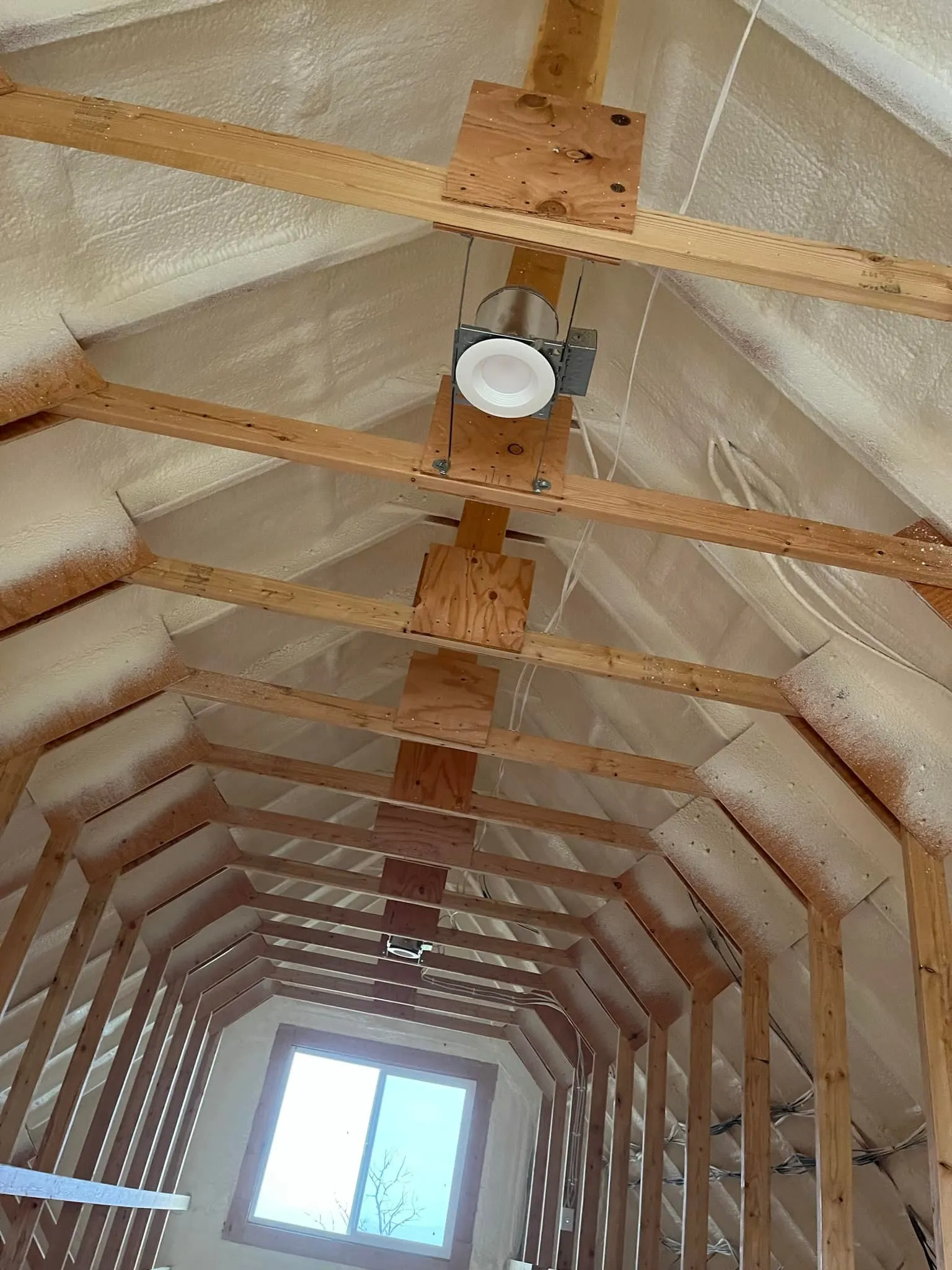
Every project starts with a free assessment, where we walk your attic, walls, crawl space, or metal building to find exactly where heat escapes. From there, we handle prep, application, and cleanup, spraying closed-cell foam to a precise thickness for the R-value your project demands.
We insulate new construction, remodels, barns, shops, and existing homes, and most residential jobs wrap up in a day or two. You can return to the space after roughly 24 hours of curing.
Things to Consider Before You Book:
We live here too, so we know exactly how valley weather punishes a poorly sealed house. High Country Solutions is licensed, insured, and local, and we treat every home like it belongs to family.
No pushy upsells and no mystery pricing, just honest recommendations and workmanship backed by a warranty. That straightforward approach is why neighbors keep sending friends our way.
Valley homes face deep cold, intense high-altitude sun, and dramatic swings between day and night temperatures. Closed-cell foam handles all of it, holding conditioned air inside through subzero snaps and blocking heat gain during July hay season.
A family off Teton Creek Road turned a freezing metal shop into a comfortable guest suite with two inches of closed-cell foam on the walls and ceiling. The space reached R-14 with a built-in vapor barrier, and the shop heater now runs a fraction of the time. The entire install took one day.
Ready to stop paying to heat the outdoors? Call High Country Solutions at (307) 248-9063 or email [email protected] for your free quote and free consultation. We will show you exactly where your home loses money and how quickly spray foam pays it back.
It typically performs for the life of the building, often 80 years or more, without sagging or settling.
Yes, for most Victor homes. The higher R-value, air sealing, and moisture protection usually pay for themselves through lower heating bills.
Absolutely. We regularly insulate attics, crawl spaces, and rim joists in finished homes with minimal disruption.
Plan on staying out of the work area for about 24 hours while the foam cures and the space airs out.
It makes a big difference. Sealing warm-air leaks at the ceiling keeps your roof cold so snow melts evenly instead of forming dams.