
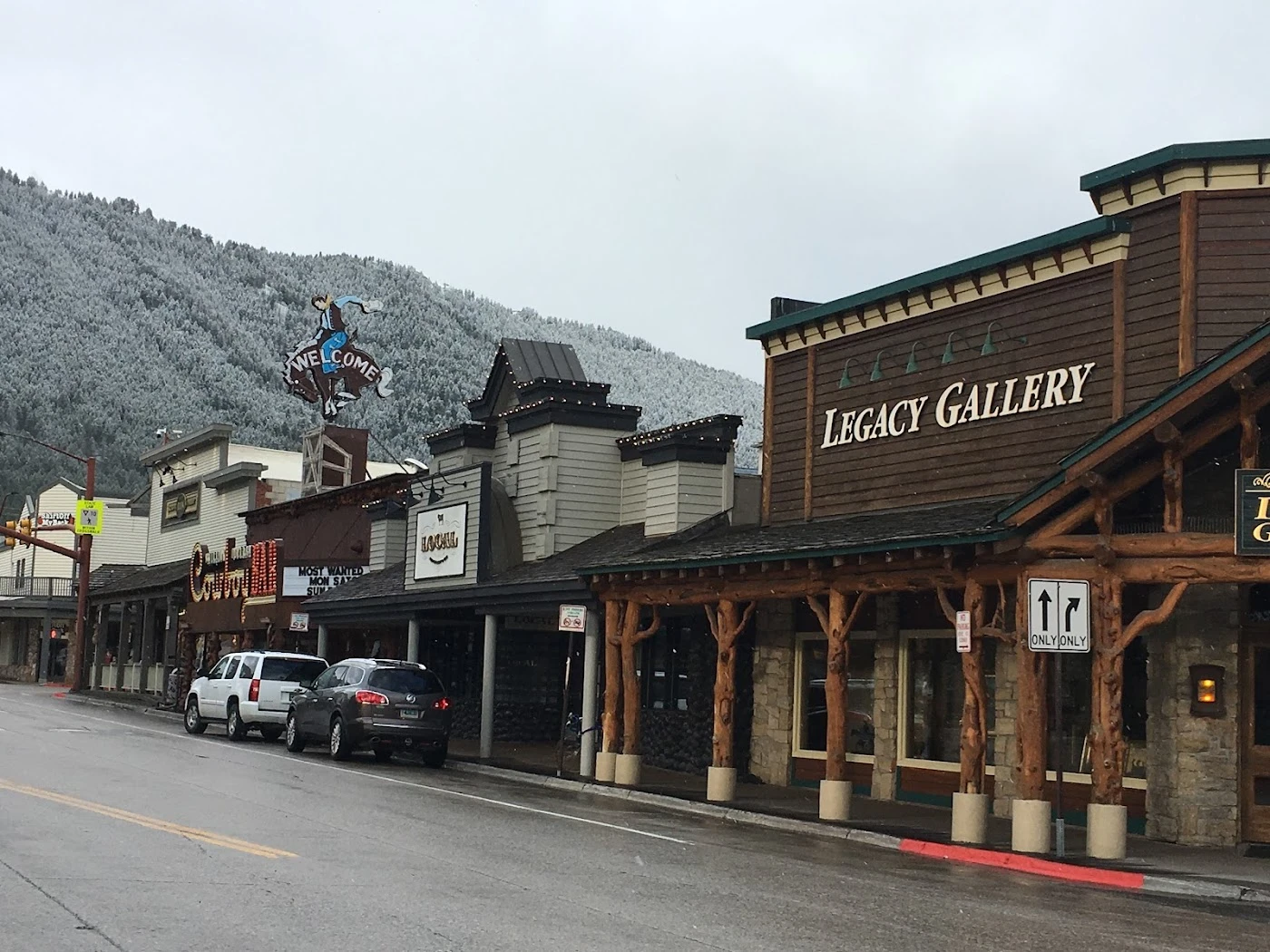
Jackson Hole sits in a wide valley carved by glaciers and surrounded by the rugged peaks of the Teton Range and the Gros Ventre Range in northwest Wyoming. The valley was named after David Edward Jackson, a mountain man and fur trapper who spent time in the region during the early 1800s. What started as a remote trapping and ranching outpost gradually grew into a small but resilient community shaped by some of the harshest winter weather in the contiguous United States.
Today, Jackson Hole draws visitors from around the world for Grand Teton National Park, the legendary steeps of Jackson Hole Mountain Resort, and the National Elk Refuge, where thousands of elk congregate each winter. With a permanent population of roughly 10,500 residents and winter temperatures that regularly plunge well below zero, the homes and commercial buildings here face insulation demands that most of the country never has to think about.
Picture waking up on a January morning in Jackson Hole when it is fifteen below zero outside, yet every room in your home stays perfectly warm without the furnace running nonstop. That is exactly what Closed-Cell Spray Foam Insulation delivers for homeowners in Jackson Hole and surrounding areas, creating an airtight thermal seal that blocks bitter cold, slashes energy bills, and guards your home against moisture damage for decades to come.
Closed-Cell Spray Foam Insulation packs more insulation power per inch than any other product available to homeowners today. It expands on contact to fill every crack, gap, and void, sealing out drafts, moisture, and pests while simultaneously adding structural rigidity to your walls and roof deck.
According to the U.S. Department of Energy, proper air sealing and insulation upgrades can save homeowners up to 15% on heating and cooling costs, with savings running even higher in extreme climates like Wyoming's (energy.gov, 2023).
Our installation process begins with a detailed inspection of your home or building to pinpoint exactly where air leaks and inadequate insulation are costing you money and comfort. We then prepare the work area, apply the Closed-Cell Spray Foam Insulation using commercial-grade spraying equipment, and verify that every inch meets the required thickness for full performance.
Every project follows the manufacturer's specifications for application temperature, layer thickness, and cured density so your insulation performs exactly as rated for years to come. We coordinate around your schedule and leave the work area clean when the job is finished.
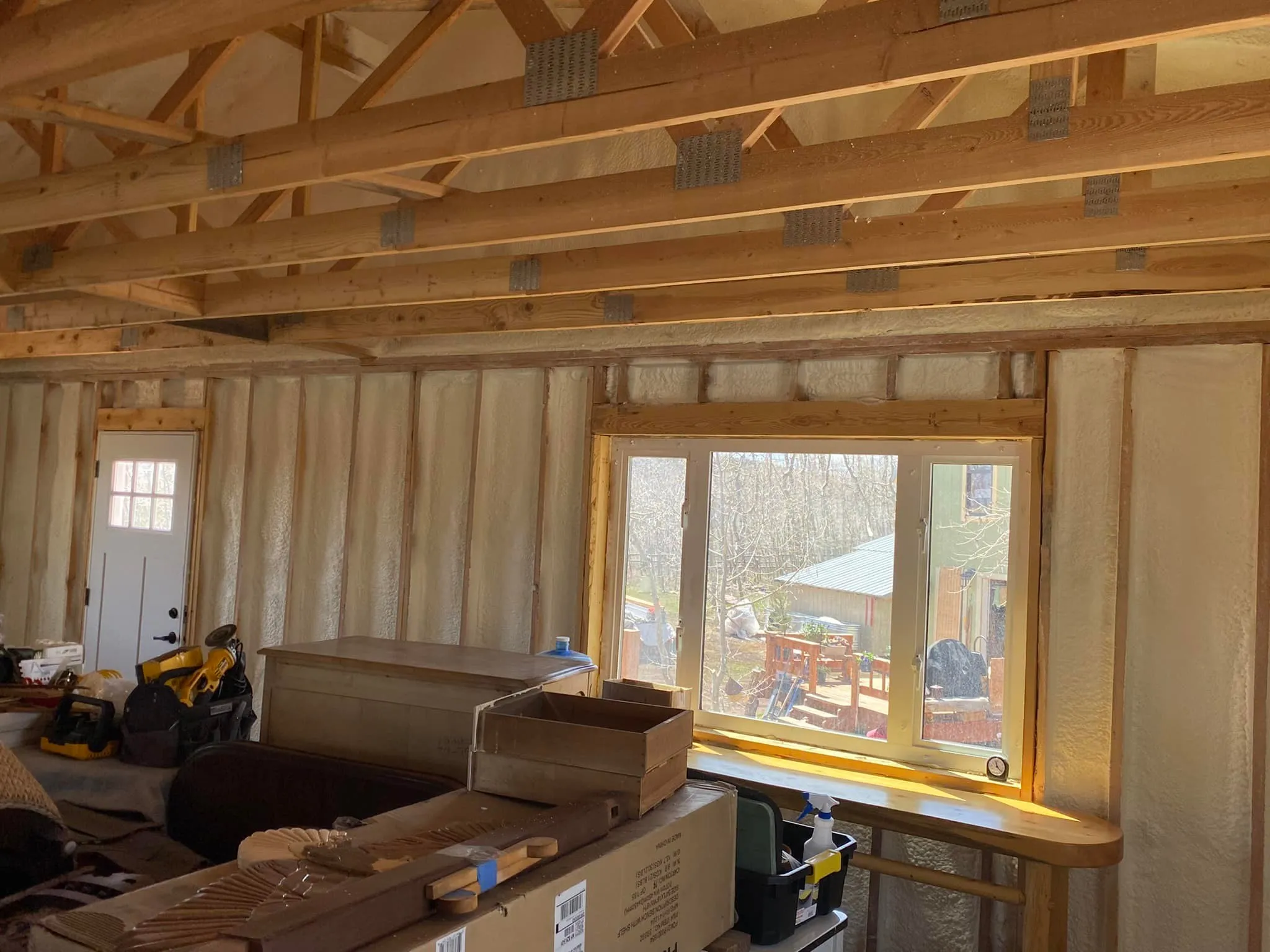
Not all spray foam performs the same way, and picking the wrong type can leave your home vulnerable to cold and moisture. The table below shows the most important differences between the two main types.
|
Feature |
Closed-Cell Foam |
Open-Cell Foam |
|---|---|---|
|
R-Value per Inch |
~R-7 |
~R-3.7 |
|
Moisture Barrier |
Yes |
No |
|
Density |
1.5-2.0 lbs/ft³ |
0.5 lbs/ft³ |
|
Structural Support |
Yes |
Minimal |
|
Best Application |
Walls, crawl spaces, basements |
Interior walls, attics |
Applications:
Polyurethane foam types:
For Jackson Hole's brutal winters and the serious moisture risks tied to snowmelt and groundwater, closed-cell foam is the better choice for nearly every below-grade and exterior-facing application.
Homes insulated with Closed-Cell Spray Foam Insulation consistently outperform those using fiberglass or cellulose in real-world energy testing. The airtight seal means your heating and cooling equipment runs less often, lasts longer, and keeps your indoor air quality higher by blocking dust, pollen, and other outdoor pollutants from sneaking in through gaps.
The North American Insulation Manufacturers Association reports that roughly 90% of U.S. homes are under-insulated, meaning the vast majority of homeowners are effectively paying to heat and cool the outdoors (naima.org, 2022). Upgrading to closed-cell spray foam solves that problem with a single application that keeps working for the life of the building.
Jackson Hole winters feature average highs in the upper 20s with overnight lows that regularly drop to ten or fifteen below zero, and wind chills can push those numbers even lower. Spring brings rapid snowmelt that sends water seeping into foundations, crawl spaces, and rim joist areas if they are not properly sealed and insulated against moisture intrusion.
Our Closed-Cell Spray Foam Insulation handles both of these threats at the same time. The high-density foam formula blocks cold air penetration completely while acting as a waterproof vapor barrier that keeps snowmelt, rain, and groundwater outside your home's building envelope where it belongs.
A homeowner in Jackson Hole was spending over $400 per month to heat a two-story house built in the 1990s with fiberglass batts that had settled and left large gaps around the rim joist and crawl space. We removed the old insulation, applied two inches of Closed-Cell Spray Foam Insulation to the rim joist and three inches to the crawl space walls, and the homeowner reported a 35% reduction in heating costs the following winter, along with noticeably more even temperatures on the second floor.
Call High Country Solution at (307) 248-9063 or email [email protected] to schedule a free insulation assessment and receive a straightforward quote for your Jackson Hole property.
When properly installed, closed-cell spray foam insulation lasts the lifetime of the building without settling, sagging, or losing its R-value.
Once fully cured, closed-cell spray foam is completely inert and non-toxic. We follow strict safety protocols during the installation process as well.
Yes, we regularly retrofit closed-cell spray foam in existing homes, focusing on crawl spaces, rim joists, basements, and attics where the improvement is greatest.
Closed-cell spray foam carries a higher upfront cost than fiberglass but delivers far better performance, typically paying for itself through energy savings within a few heating seasons.
Yes, the dense cell structure of closed-cell foam reduces sound transmission through walls and floors, though open-cell foam offers slightly better sound-dampening properties.