
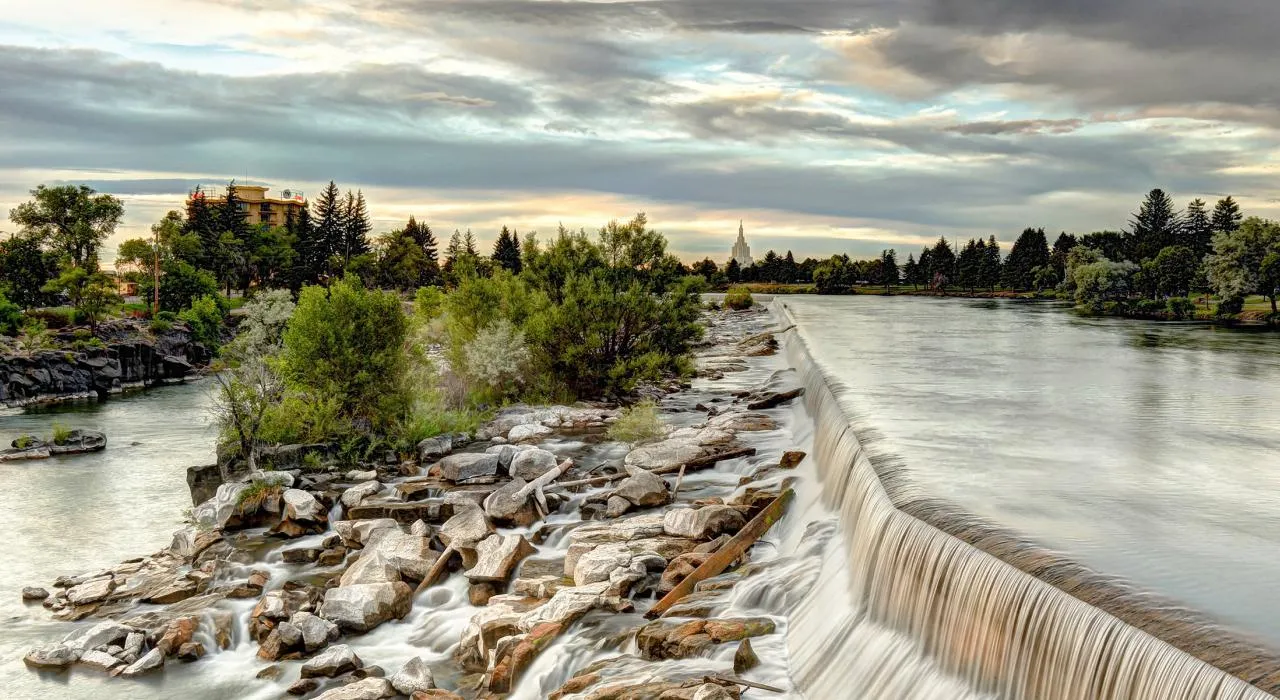
Nestled along the banks of the mighty Snake River, Idaho Falls serves as a vibrant cultural and economic hub for Eastern Idaho. Originally known as Eagle Rock for the nesting site on a basalt island in the river, the city has evolved from a frontier crossing into a thriving community known for its stunning Greenbelt and the distinct man-made waterfalls that generate hydroelectric power for the region. The city acts as a gateway to adventure, sitting in the shadow of the Teton Mountain Range and providing easy access to Yellowstone National Park.
Beyond its scenic beauty and outdoor recreation, Idaho Falls boasts a rich history preserved in places like the Museum of Idaho. The community is characterized by a blend of agricultural heritage and modern scientific innovation, largely driven by the nearby Idaho National Laboratory. Residents here value resilience and sustainability, traits necessary to thrive in a region that experiences the full spectrum of four distinct seasons.
Imagine settling into your favorite chair on a snowy evening, only to feel a chill creeping across the floor despite the furnace running full blast. Homeowners in Idaho Falls often face this discomfort, battling energy waste caused by invisible gaps in the home's thermal envelope. High Country Solutions eliminates these costly leaks through professional air sealing, transforming drafty structures into fortified sanctuaries of comfort. By addressing the root cause of energy loss, you protect your investment, lower monthly expenses, and contribute to a greener future for the entire community.
The climate in Bonneville County presents unique challenges for residential structures, with temperature swings that can stress building materials. Winters in the Snake River Valley bring piercing winds and sub-freezing temperatures that exploit every crack and crevice in a home's exterior. Without a secure thermal barrier, the warm air you pay to heat escapes into the attic or crawl space, while freezing outside air infiltrates your living space.
Proper air sealing acts as a windbreaker for your house, stopping this uncontrolled air exchange immediately. Securing the building envelope prevents your heating system from working overtime to maintain a stable temperature. This reduction in HVAC workload extends the lifespan of your equipment and prevents wear and tear from constant cycling during the harsh Idaho winter months.
Industry Fact: According to the Energy Star program, air leakage accounts for between 25% and 40% of the energy used for heating and cooling in a typical home. Sealing these leaks can significantly reduce that waste.
Heat naturally rises, creating a phenomenon known as the "stack effect," in which warm air rises and escapes through the attic, pulling in cold air from the basement or crawl space. Breaking this cycle requires a meticulous approach to sealing top-plate gaps, open chases around plumbing vents, and recessed light fixtures. Addressing these critical bypasses stops the vertical movement of air that drives up energy bills.
Creating a sealed boundary involves more than just applying caulk to windows; it requires identifying major leakage points hidden behind walls and insulation. Advanced techniques target the interfaces between different building materials, where separation often occurs over time. By unifying the structure's envelope, moisture intrusion is also blocked, which is vital for preventing mold growth and structural rot in wooden framing components.
Table: Common Leak Locations & Solutions
|
Leak Location |
The Problem |
The Solution |
Benefit |
|---|---|---|---|
|
Attic Hatches |
Warm air bypasses the insulation and enters the cold attic. |
Weatherstripping and rigid foam covers. |
Prevents heat loss and ice dam formation. |
|
Recessed Lights |
Vents allow conditioned air to escape into the ceiling. |
Fire-rated covers and high-temp sealant. |
Stops the "chimney effect" in living areas. |
|
Rim Joists |
Where the foundation meets the wood frame, gaps form. |
Spray foam or rigorous caulking. |
Eliminates cold floors and basement drafts. |
|
Plumbing Vents |
Oversized holes cut for pipes allow airflow. |
Expanding foam sealant. |
Blocks pathways for pests and odors. |
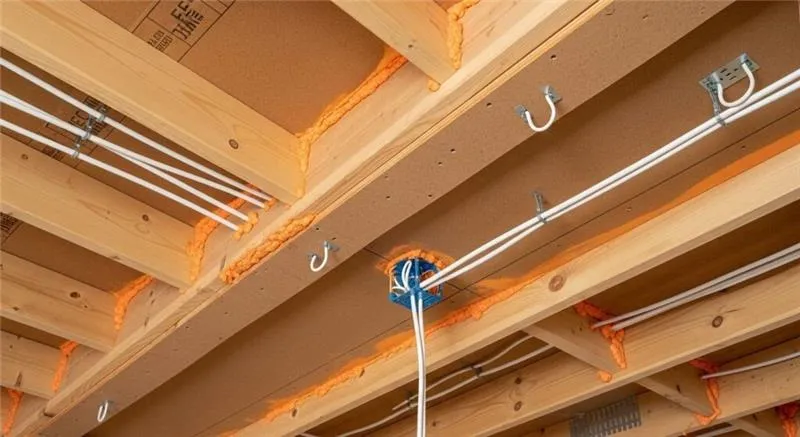
A leaky home does not just lose heat; it actively inhales dust, pollen, and agricultural allergens from the surrounding Idaho landscape. When air enters through unsealed gaps in a crawl space or attic, it often carries particulate matter and humidity that degrade indoor air quality. Sealing these entry points creates a healthier environment for families, particularly those with respiratory sensitivities or allergies.
Control over the indoor environment also means keeping unwanted guests out. Small gaps in the foundation or eaves serve as open doors for insects and rodents seeking shelter from the cold. A tightly sealed home acts as a physical barrier against pests, keeping your interior space clean, safe, and reserved for your enjoyment.
Things to Consider:
Investing in your property's efficiency yields immediate returns through lower utility costs and increased market value. Residents of Idaho Falls deserve a service provider that prioritizes precision and long-term performance over quick fixes. High Country Solutions delivers rigorous air-sealing protocols that meet the highest standards of building science.
Don't let another season pass with money slipping through the cracks of your home. Taking action now secures a comfortable environment for years to come. Contact High Country Solutions to begin fortifying your home against the elements and reclaiming control over your energy usage.
Every home in Idaho Falls, from the historic properties near the numbered streets to the newer developments in the foothills, has a unique thermal profile. Understanding local building codes and common construction styles allows for a more effective assessment of where energy loss occurs. The focus remains on identifying specific weaknesses in the building envelope that are characteristic of the region's architecture, such as unsealed basements in mid-century ranch homes or drafty cantilevers in split-level designs.
A 1940s bungalow in central Idaho Falls suffered from severe ice dams and cold drafts despite having new windows. An assessment revealed massive air bypasses around the chimney chase and original attic hatch. By sealing these specific bypasses and treating the rim joists, the homeowner reported a 20% drop in heating costs the following winter and the complete elimination of ice dams, proving that targeted air sealing often outperforms general insulation upgrades.
Stop paying to heat the outdoors and start enjoying a truly comfortable home. Call High Country Solutions at (307) 248-9063 or email [email protected] to secure your property's thermal envelope today.
Most homeowners see energy savings of 15% to 30% after a comprehensive air-sealing and insulation project, depending on the home's initial condition.
A home can be too tight if not properly ventilated, but professionals calculate the minimum airflow requirements (ASHRAE standards) to ensure safety and fresh air quality while maximizing efficiency.
Insulation acts like a blanket to slow heat transfer, while air sealing acts like a windbreaker to stop airflow; both are necessary for maximum performance, as air leaks can render insulation ineffective.
The process is generally low-impact and clean, as most work is done in the attic, crawl space, or basement, with technicians taking care to protect living areas during service.
Common signs include uneven room temperatures, cold floors, high energy bills, visible dust near vents, and the formation of ice dams on the roof during winter.