Wall Insulation vs Residential Insulation Scope Comparison in Alpine, WY
Wall insulation targets a single building envelope component, while residential insulation covers the full home envelope, including walls, attic, crawl…


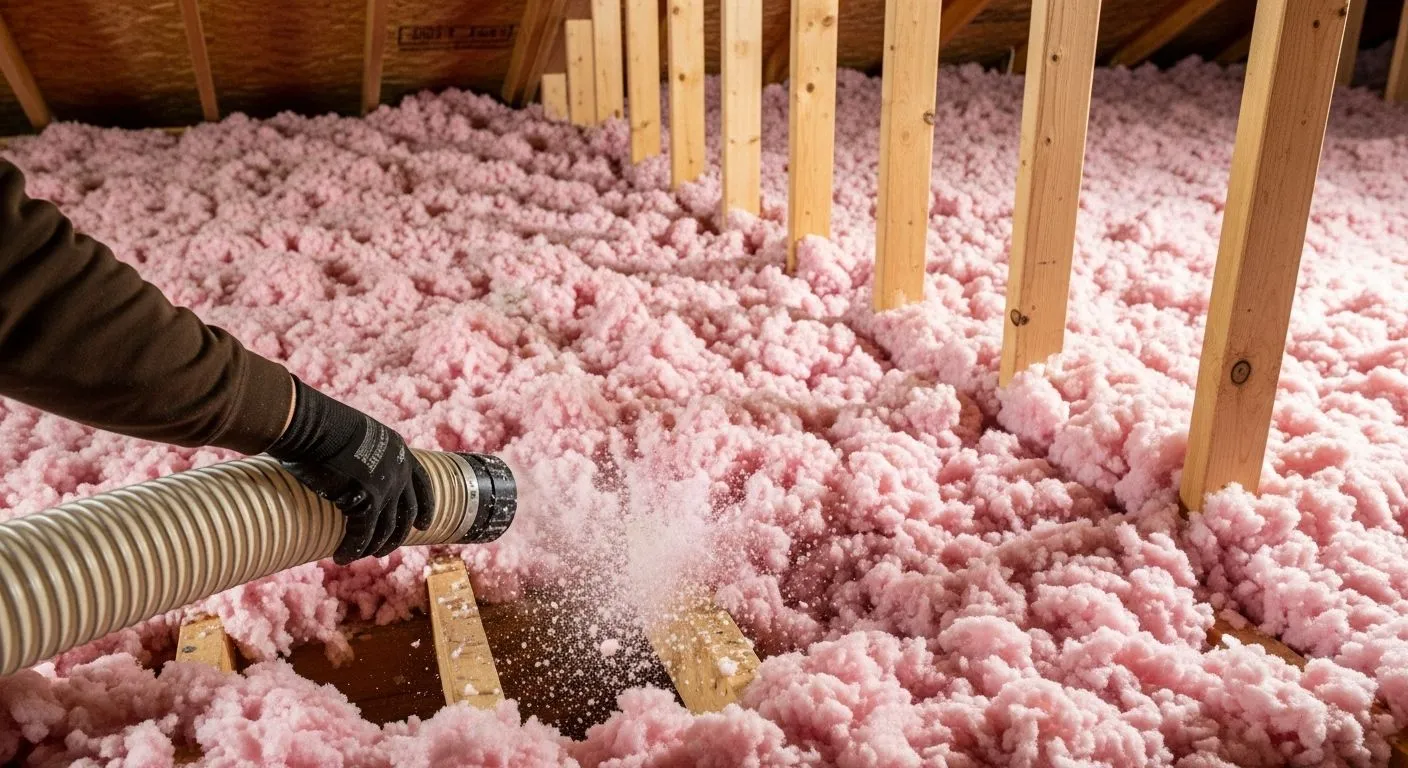
Uneven blown-in insulation coverage is one of the most common reasons homes fail to meet energy efficiency targets, even after a fresh installation. The root causes range from improper installation techniques and material settling to obstructed attic spaces and inadequate air sealing. For contractors and homeowners, understanding why these gaps occur and how to prevent them directly impacts thermal performance, customer satisfaction, and long-term energy savings. The right solution depends on the insulation material chosen, the condition of the building envelope, and whether the work involves a new install or a retrofit over existing insulation, making blown-in insulation solutions a reliable option for achieving consistent coverage.
Blown-in insulation, whether fiberglass or cellulose, is designed to fill cavities and attics by flowing around obstructions. But that same loose-fill nature makes it vulnerable to several failure modes that create uneven coverage.
Settling is the single most cited cause of degraded blown-in insulation performance. Cellulose, made from recycled paper treated with fire retardants, settles more noticeably than fiberglass. Industry data shows that cellulose can settle by roughly 15 to 20% of its initial installed depth over time, meaning a 12-inch application may compress to roughly 10 inches, which directly reduces the effective R-value according to Energy Star recommendations. Fiberglass settles less but is not immune, particularly when installed below the manufacturer’s recommended density. Some stabilized cellulose products include adhesives that reduce settling, and these have become more common in 2026 as building codes tighten.
Most attics contain a maze of ductwork, electrical conduit, plumbing vents, truss chords, and recessed lighting housings. These obstructions create shadow zones where insulation naturally thins out. A crew blowing insulation at a consistent height across the attic floor will often find shallow coverage directly behind or beneath duct runs. Terrain Insulation notes that uneven coverage where insulation appears lower in some areas is one of the most frequently reported problems after blown-in attic work. The solution involves both adjusting the technique around obstacles and supplementing with hand-placed material in tight spots.
Air sealing and insulation are not interchangeable steps, but many installations treat them that way. When gaps around top plates, recessed lights, chimney chases, and utility penetrations remain unsealed, conditioned air from the living space rises into the attic. This air movement physically displaces loose-fill insulation, creating channels and bare spots that worsen over time. As USA Insulation explains, air sealing prevents the movement of air through the attic, which directly reduces moisture problems and insulation displacement. In 2026, the best practice is to complete all air sealing with foam or caulk before any insulation is blown, ensuring proper blown-in insulation coverage is achieved.
Water from roof leaks, condensation, or inadequate ventilation can saturate blown-in insulation. Wet insulation compacts, loses its loft, and in the case of cellulose, can develop mold. Even after drying, compressed insulation rarely regains its original thickness. American Insulation identifies moisture absorption and mold risk as a primary concern with blown-in materials. Ensuring proper attic ventilation and addressing any roof or plumbing leaks before installation is non-negotiable.
Insulation blowing machines must be calibrated to deliver the correct density for the material being used. Too low a density results in fluffy, underweight coverage that settles excessively. Too high a density wastes material and can overfill cavities in wall applications. Hose handling technique matters as well. Operators who move the hose too quickly create thin spots, while those who linger too long in one area create mounds that leave adjacent areas shallow.
The choice between cellulose and fiberglass loose-fill has a direct impact on how evenly coverage holds up over time.
| Factor | Cellulose Blown-In | Fiberglass Blown-In |
|---|---|---|
| R-Value per Inch | ~3.5 to 3.7 | ~2.2 to 2.7 |
| Settling Tendency | Moderate to High (15-20%) | Low (5-10%) |
| Fills Small Gaps | Excellent | Good |
| Moisture Resistance | Moderate (treated but absorbent) | Higher |
| Cold Weather R-Value Retention | Better maintained | Can drop at low temps |
| Weight | Heavier (may require reinforced ceilings) | Lighter |
| Best Application | Attic floors, dense-pack walls | Open attics, wall cavities |
| Typical Installed Cost (per sq ft) | $1.00 to $1.50 | $1.10 to $1.60 |
Cellulose generally provides a higher R-value per inch and fills irregular spaces more completely, making it effective for covering obstructions. However, its tendency to settle means that over-installing by roughly 20% above the target depth is a common practice to account for compression. Fiberglass resists settling better and handles moisture more readily, but its lower R-value per inch requires greater installed depth to achieve the same thermal performance. Research from Energy Vanguard shows that loose-fill fiberglass can lose effective R-value as attic temperatures drop, a phenomenon less pronounced with cellulose.
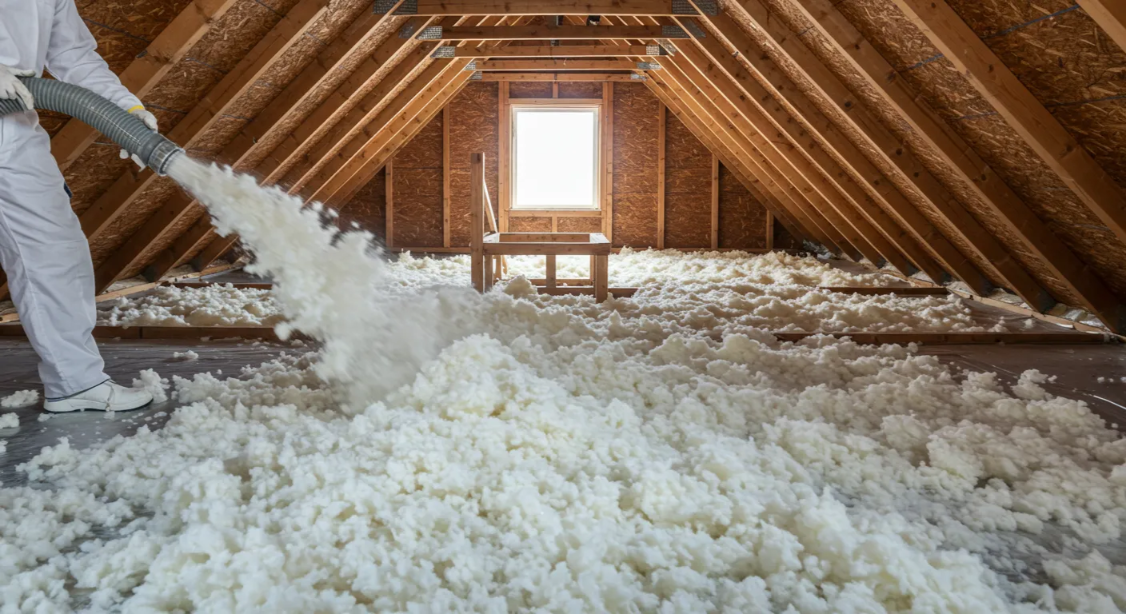
Before any insulation material enters the attic, every penetration through the ceiling plane should be sealed. This includes top plates, electrical boxes, recessed light housings (or replacing them with IC-rated, airtight fixtures), plumbing vents, and chimney or flue chases with proper fire-rated materials. This step alone eliminates one of the primary drivers of post-installation settling and void formation.
Professional crews install depth markers, typically small wooden rulers or rulers attached to the attic floor joists, at regular intervals before blowing begins. These markers provide a visual reference during installation and a verifiable standard after completion. Cross-referencing the total number of bags used against the manufacturer’s coverage chart for the target R-value provides a second layer of quality control.
For retrofit wall insulation, dense-pack installation at approximately 3.5 pounds per cubic foot for cellulose or 1.8 pounds per cubic foot for fiberglass creates a solid fill that resists settling and dramatically reduces air movement through the cavity. Dense-pack requires specialized equipment with higher pressure output and a two-hole technique per cavity to confirm complete fill.
Experienced crews develop specific strategies for common obstructions. Ductwork receives hand-placed insulation underneath and around the sides. Recessed lights get specially rated covers before insulation is blown over them. Truss chords and webbing receive supplemental material applied with care to avoid bridging and to maintain consistent depth on the attic floor.
Thermal imaging cameras and blower door testing have become more accessible and affordable in 2026, and many contractors now offer post-installation verification as either a standard inclusion or an upsell. These tools identify cold spots, air leaks, and thin coverage areas that are not visible to the naked eye. Providing homeowners with thermal imaging documentation has also become a powerful differentiator in competitive markets.
| Project Type | Recommended Material | Key Considerations | Installation Priority |
|---|---|---|---|
| New Construction Attic | Fiberglass or Cellulose | Easy access, few obstructions | Depth consistency, baffles at eaves |
| Retrofit Attic Over Existing | Cellulose | Fills gaps in old insulation well | Air seal first, check weight load on ceiling |
| Wall Cavities Retrofit | Dense-Pack Cellulose | Superior gap filling | Two-hole fill method, density verification |
| Cathedral Ceilings | Fiberglass Batts or Spray Foam | Blown-in not ideal for sloped applications | Consider an alternative insulation type |
| Cold Climate (Zones 5-7) | Cellulose preferred | Better cold temp R-value retention | Over-install for settling, verify ventilation |
| Hot Climate (Zones 1-3) | Fiberglass or Cellulose | Focus on radiant barrier plus insulation | Adequate ventilation to prevent moisture |
When evaluating a blown-in insulation installation, either your own crew’s work or a competitor’s, look for these indicators:
Bar Chart Concept: Side-by-side comparison of initial installed R-value versus effective R-value after 5 years for cellulose and fiberglass at identical installed depths. This visual would show the cellulose settling curve versus fiberglass stability, making the case for over-installation with cellulose.
Thermal Imaging Mockup: Split image showing an attic before and after proper blown-in installation, with thermal camera colors indicating cold spots (blue/purple) in the before image and even thermal coverage (green/yellow) in the after image.
Uneven blown-in insulation is not a minor inconvenience. It means higher energy bills, comfort complaints, and callbacks that erode your margins and reputation. At High Country Solution, we help contractors and homeowners plan and execute insulation projects that meet target R-values with verified, even coverage from day one. Whether you are dealing with a problematic retrofit or planning a new build, our team provides the expertise to get it done correctly.
Contact us at [email protected] or call (307) 248-9063 to discuss your project requirements and get started.
Settling with cellulose can reduce the effective R-value by 15 to 20% of the installed depth. For a target R-49 attic, this could mean the effective performance drops closer to R-40 over several years, which is why over-installing and using stabilized products matter.
Yes, and this is a common retrofit approach. However, the existing uneven areas should be leveled first if possible, and air sealing must be completed before adding material. Adding new insulation over voids without addressing the root cause simply buries the problem without fixing it.
Both can achieve even coverage when installed correctly. Cellulose fills small gaps more effectively due to its smaller fiber size, but it settles more over time. Fiberglass resists settling better but may leave microscopic voids around obstructions. The installer’s technique and quality control matter more than the material choice.
The most reliable methods are depth markers checked visually, bag count reconciliation against manufacturer coverage charts, and thermal imaging with a blower door test. Thermal imaging is the gold standard because it reveals actual thermal performance, not just visible depth.
Blown-in insulation works in both locations, but wall applications require dense-pack installation to prevent settling and void formation. Dense-pack uses higher pressure and specific fill techniques to achieve approximately 3.5 lbs per cubic foot density for cellulose, which holds its position in the wall cavity long-term.