Choosing Spray Foam Insulation Based on Climate and Home Structure in Alpine, WY
Alpine, Wyoming, sits in a heating-dominated climate zone where winter temperatures routinely plunge below zero and summer days can still…


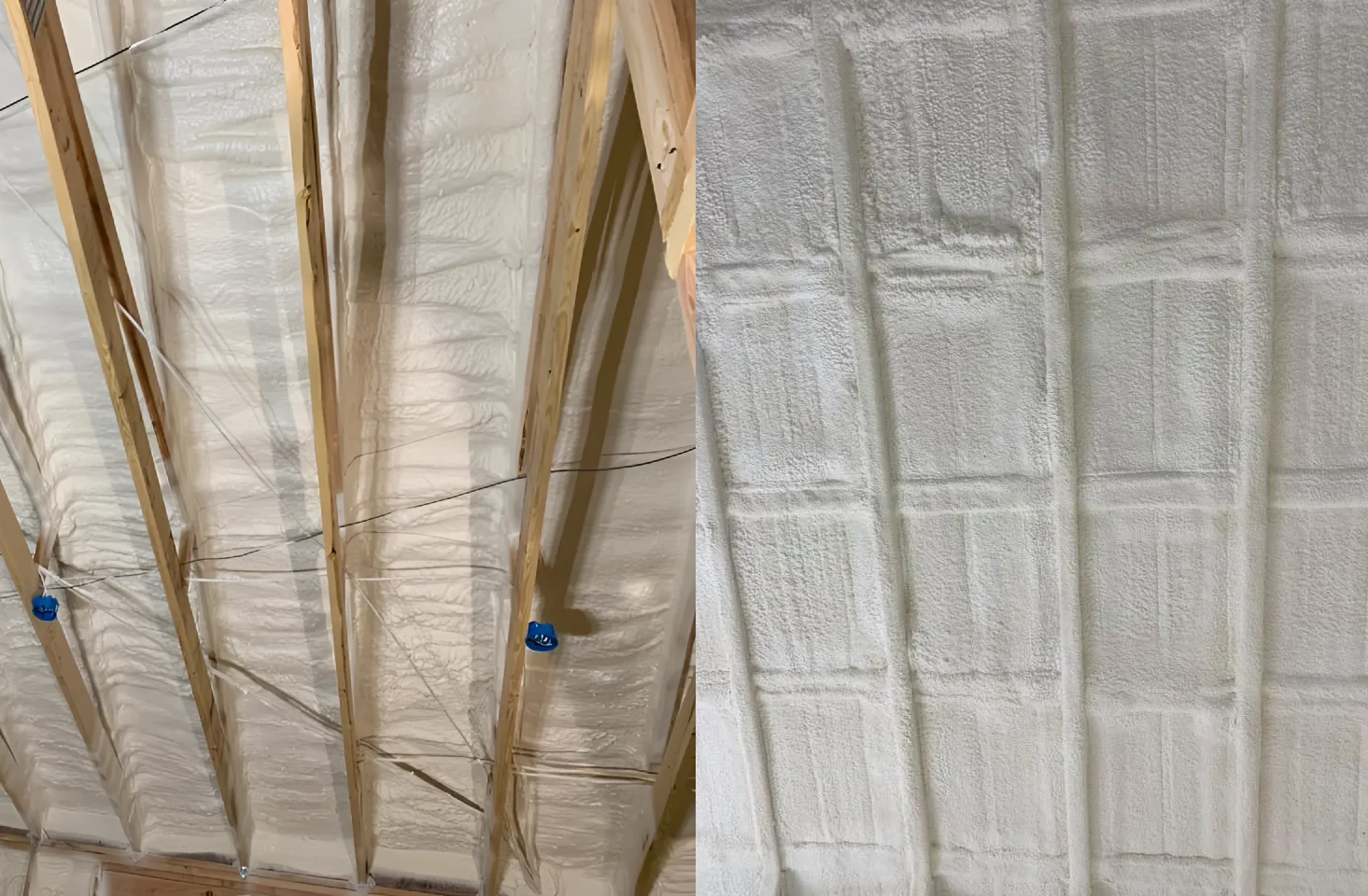
Closed-cell spray foam is the better performer for Alpine, Wyoming properties in virtually every meaningful category. Alpine sits in AutoHVAC.ai – Wyoming Climate Zones: R-Values, Design Temps and Calculator, one of the coldest classification zones in the continental United States, with winter design temperatures dipping well below zero. Closed-cell spray foam delivers an R-value of approximately R-7 per inch, nearly double the R-3.7 to R-4.3 per inch that open-cell foam provides. In a climate where heating costs dominate energy bills for six to eight months of the year, that higher thermal resistance per inch translates directly into lower utility costs and more comfortable indoor temperatures. Closed-cell foam also serves as a vapor retarder, which is critical in Alpine’s freeze-thaw cycle environment, where trapped moisture can destroy wall assemblies. Open-cell foam absorbs water, making it a poor choice for exterior applications in a mountain climate. The tradeoff is upfront cost: closed-cell spray foam runs significantly higher per square foot. But for long-term building performance in Lincoln County’s extreme winters, closed-cell foam pays for itself.
Alpine sits at approximately 6,948 feet in elevation along the Greys River in Lincoln County. The town experiences long, harsh winters with heavy snowfall, extended periods of sub-freezing temperatures, and a significant number of heating degree days. Wyoming’s climate zones range from 5B to 7, and the western mountain regions, including Alpine, fall into the most demanding category.
The U.S. Department of Energy – Guide to Determining Climate Regions by County classifies these areas as very cold to subarctic. Buildings in this zone lose heat aggressively through every building envelope weakness. Air leaks, thermal bridging, and insufficient insulation all compound into massive energy waste and occupant discomfort during winter.
Local building codes, guided by the Insulation Institute – Wyoming Building Energy Code, mandate specific R-values for different envelope assemblies. Meeting those requirements with fiber insulation alone often demands deeper wall cavities or additional rigid foam layers. Spray foam solves this problem by packing more R-value into thinner assemblies.
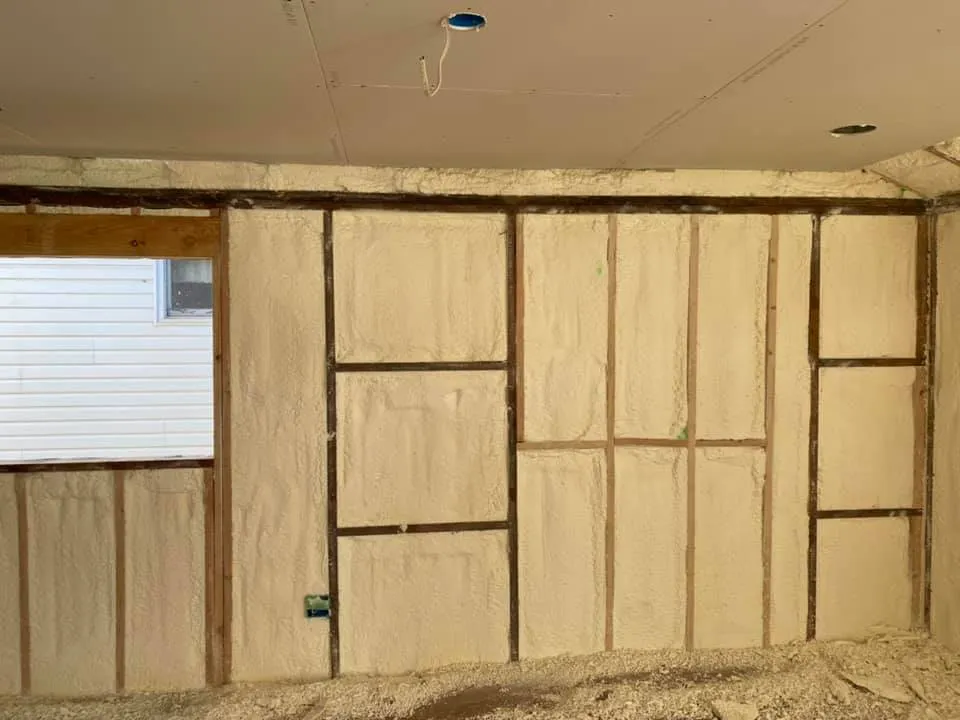
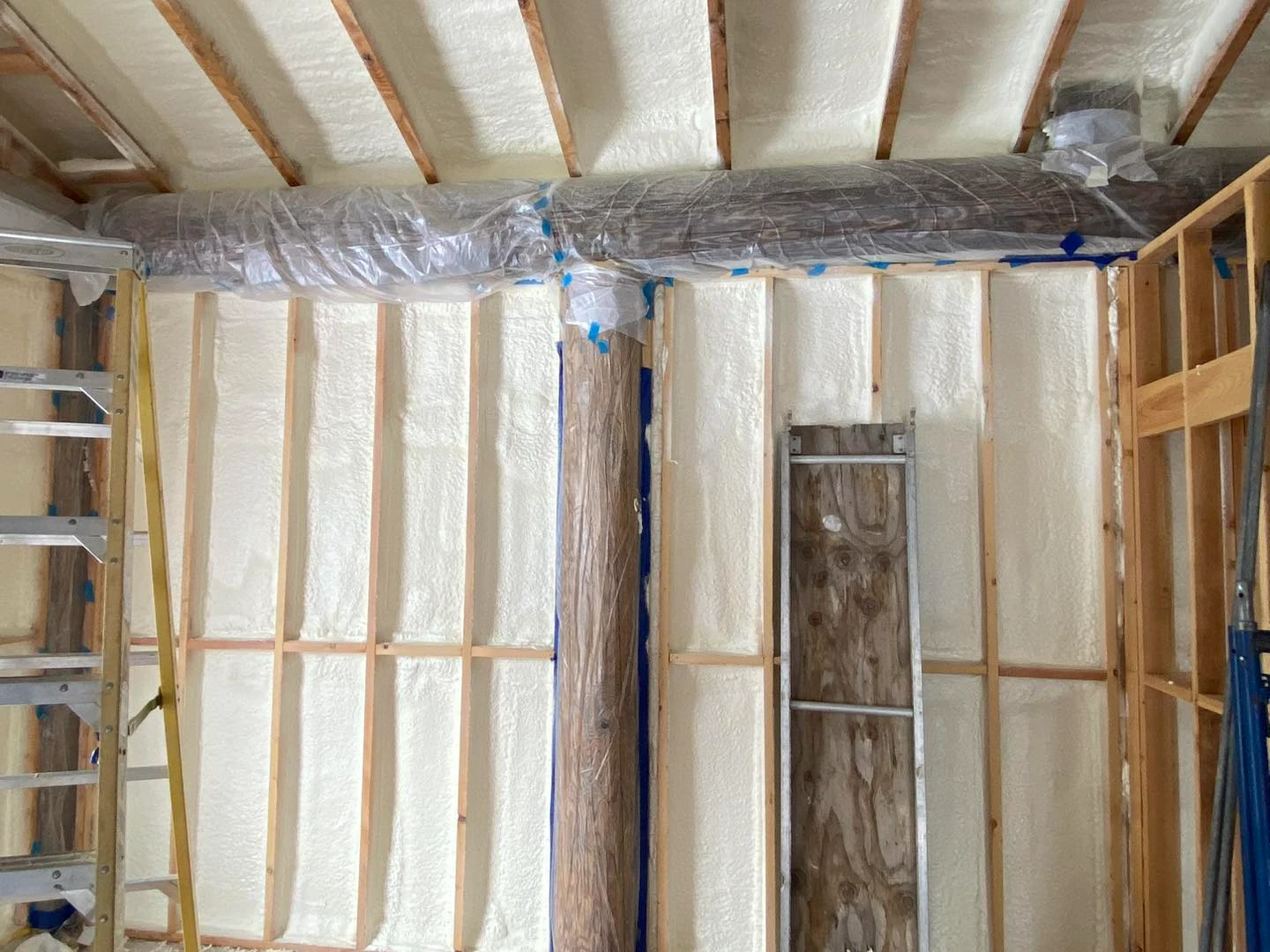
According to Johns Manville – Spray Foam: Open-Cell vs. Closed-Cell achieves approximately R-7 per inch while open-cell spray foam lands between R-3.7 and R-4.3 per inch. In a standard 2×4 wall cavity with roughly 3.5 inches of depth, closed-cell foam reaches R-24.5 without any additional insulation layers. Open-cell in the same cavity delivers only R-13 to R-15, falling short of the R-20 minimum code requirement for Climate Zone 7 walls.
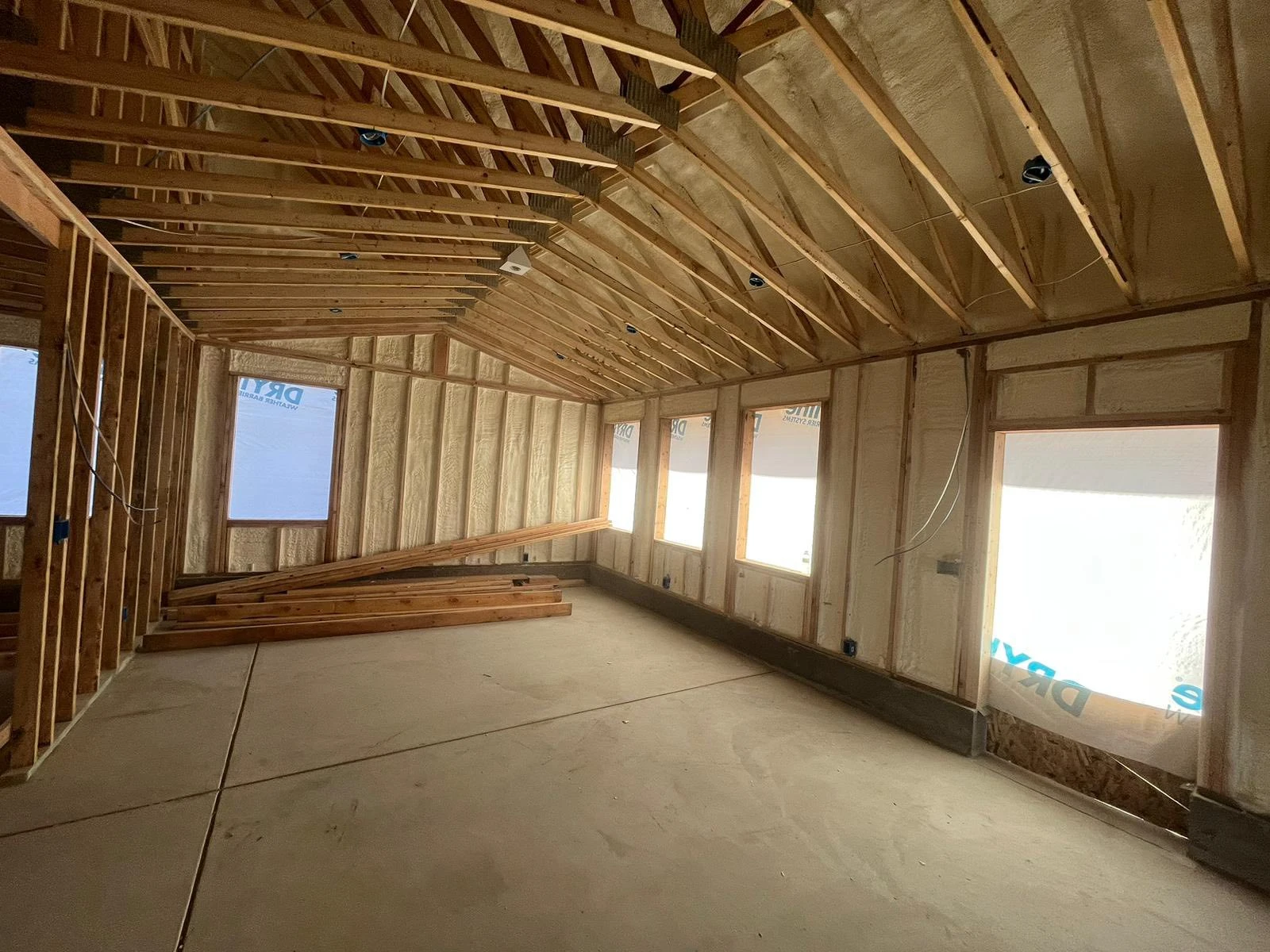
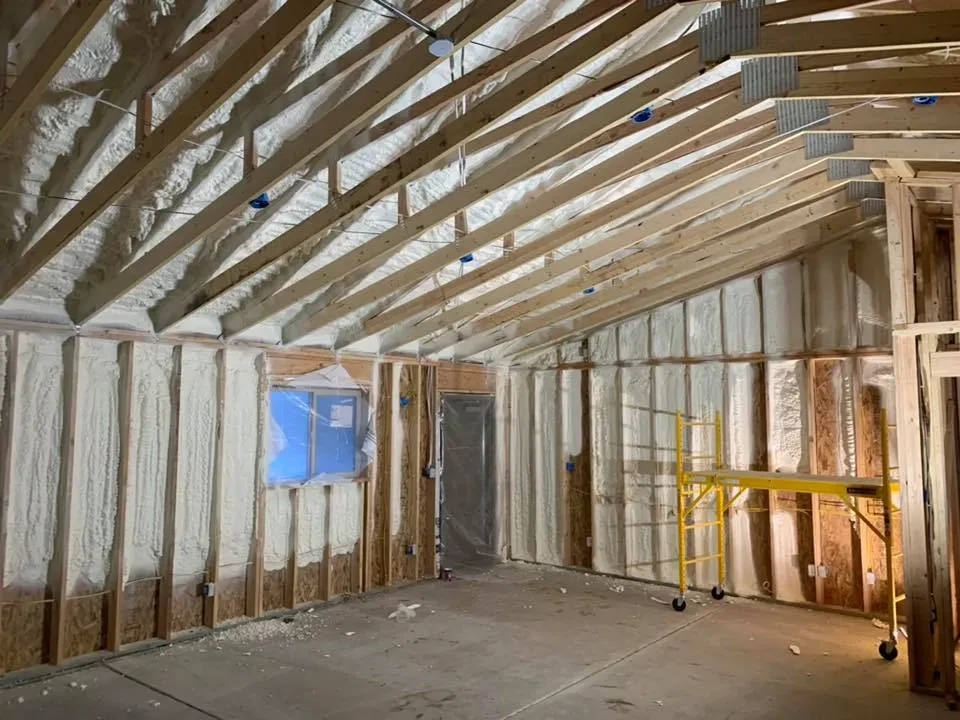
In vaulted or cathedral ceilings where rafter depth may be limited, this difference becomes even more important. A 2×10 rafter (9.25 inches) filled with closed-cell foam achieves R-65, well exceeding the R-49 ceiling requirement. The same rafter filled with open-cell only reaches R-34 to R-40, meaning additional insulation is required, making open-cell spray foam insulation a key factor when evaluating overall performance.
This is where the comparison gets one-sided for Alpine. Closed-cell spray foam has a permeance rating below 1.0 perm per inch, qualifying it as a Class II vapor retarder at typical application thicknesses. It stops warm, moist indoor air from penetrating into cold wall cavities where it would condense on cold surfaces.
Open-cell foam is vapor-permeable, with ratings around 10 perms or higher. It allows moisture to pass through freely. In a heating-dominated climate like Alpine, that means indoor humidity carried by warm air can migrate into the wall assembly and condense when it hits cold exterior sheathing. Over time, this leads to mold growth, wood rot, and degraded insulation performance.
The Insulation Institute – Wyoming Building Energy Code reinforces the importance of proper vapor retarder placement in Climate Zones 5 through 7. Closed-cell spray foam handles this requirement as part of its installation, simplifying the assembly and reducing the risk of contractor error.
Closed-cell foam is dense and rigid. It adheres tightly to framing, sheathing, and substrates, adding measurable shear strength to wall assemblies. In Alpine, where wind loads from mountain valleys can be significant, this added rigidity improves overall closed-cell performance and structural stability.
Open-cell foam is soft, spongy, and flexible. It has no meaningful structural contribution. While this flexibility makes it forgiving in irregular cavities, it also means it cannot serve as a structural supplement.
Open-cell spray foam is noticeably better at absorbing sound. Its lower density and open cell structure dissipate acoustic energy effectively. For interior partition walls between rooms, open-cell foam provides both thermal insulation and meaningful noise reduction.
Closed-cell foam does offer some sound damping, but its rigid, dense structure reflects more sound than it absorbs. For acoustic performance, open-cell is the better choice.
The following table reflects typical installed costs in the Mountain West region. Actual pricing varies based on job complexity, access, and contractor availability.
| Factor | Closed-Cell Spray Foam | Open-Cell Spray Foam |
|---|---|---|
| R-Value Per Inch | ~R-7 | ~R-3.7 to R-4.3 |
| Cost Per Board Foot | $1.00 to $1.50 | $0.40 to $0.65 |
| Vapor Retarder | Yes (Class II) | No |
| Moisture Absorption | Negligible | High (absorbs water) |
| Structural Reinforcement | Yes | No |
| Sound Dampening | Moderate | Excellent |
| Best Application in Alpine | Exterior walls, crawlspaces, rim joists, cathedral ceilings | Interior partitions, soundproofing, bonus room ceilings |
Bar Chart Suggestion: Side-by-side bar chart comparing R-value per inch for closed-cell (R-7) versus open-cell (R-3.7), with a secondary overlay showing cost per board foot for each type. This visual reinforces the value tradeoff between upfront cost and thermal performance.
Line Graph Suggestion: Cumulative energy savings over 10 years comparing a home insulated with closed-cell spray foam versus open-cell in Climate Zone 7, factoring in heating degree days typical of Alpine, WY.
| Scenario | Property Type | Recommended Option | Estimated Cost |
|---|---|---|---|
| New construction exterior walls and cathedral ceiling | 2,400 sq ft mountain cabin | Closed-cell throughout envelope | $8,500 to $12,000 |
| Retrofit insulation in existing crawlspace and rim joists | 1,800 sq ft older home | Closed-cell for moisture and air sealing | $2,200 to $3,500 |
| Interior partition walls in new office buildout | 1,200 sq ft commercial space | Open-cell for sound and cost efficiency | $1,000 to $1,800 |
| Vaulted ceiling insulation over great room | 600 sq ft ceiling area | Closed-cell to meet R-49 in limited rafter depth | $2,500 to $4,000 |
| Basement finishing with exterior concrete walls | 1,000 sq ft basement | Closed-cell against concrete for vapor control | $2,000 to $3,200 |
Several variables determine the right insulation strategy for any Alpine property:
Choosing between open-cell and closed-cell spray foam in Alpine’s demanding climate is not a decision worth guessing on. The wrong insulation choice leads to higher energy bills, moisture damage, and uncomfortable indoor temperatures that compound year after year. At High Country Solutions, we assess your specific building, climate exposure, and budget to recommend the insulation strategy that delivers the best long-term performance for your property. Our team has extensive experience working in Lincoln County’s mountain environment and understands what it takes to keep buildings warm, dry, and efficient through Wyoming’s toughest winters.
Contact us at (307) 248-9063 or email [email protected] to discuss your project.
Yes. In Climate Zone 7, the higher R-value per inch, built-in vapor retarder, and moisture resistance of closed-cell foam deliver measurable energy savings and structural protection that offset the premium over time. The risk of condensation damage with open-cell in this climate makes the upgrade a sound investment.
We do not recommend it. Crawlspaces in Alpine are exposed to cold ground temperatures and moisture from snowmelt and groundwater. Open-cell foam absorbs water, loses its insulating value when wet, and can harbor mold. Closed-cell foam provides the air sealing, thermal resistance, and moisture barrier that crawlspace assemblies demand.
In a standard 2×4 wall cavity (3.5 inches), closed-cell foam at R-7 per inch achieves approximately R-24.5, which exceeds the R-20 code minimum for Climate Zone 7 walls without requiring any additional insulation layer. For cathedral ceilings requiring R-49, roughly 7 inches of closed-cell foam would be needed, which fits within a 2×10 rafter bay.
Closed-cell spray foam does. It adheres directly to sheathing and framing, sealing gaps and stiffening the wall assembly against racking. At Alpine’s elevation, valley winds can be sustained and forceful. A building envelope sealed with closed-cell foam resists air infiltration and pressure differences far better than buildings with batt or blown insulation alone.
Both open-cell and closed-cell spray foams are designed to last the life of the building when properly installed. Closed-cell foam is particularly durable in mountain climates because it does not absorb moisture, does not settle or sag over time, and maintains its R-value indefinitely. Open-cell foam can degrade if exposed to water, so its longevity depends heavily on keeping it dry.