Wall Insulation vs Residential Insulation Scope Comparison in Alpine, WY
Wall insulation targets a single building envelope component, while residential insulation covers the full home envelope, including walls, attic, crawl…


Old insulation loses its ability to resist heat flow over time due to settling, moisture damage, pest activity, and air gaps that develop as building materials shift. Blown-in insulation solves these problems by filling every void, conforming to irregular spaces, and restoring the thermal barrier that degraded insulation can no longer provide. For homeowners dealing with drafty rooms, high energy bills, and uneven temperatures, upgrading to blown-in insulation services is one of the most cost-effective improvements available.
Insulation is not a permanent installation. Every type has a lifespan, and the materials installed in most American homes decades ago are well past their prime. Understanding exactly how insulation fails helps homeowners and contractors make informed replacement decisions.
Gravity works against loose-fill and batt insulation constantly. Over years and decades, fiberglass and cellulose batts sag away from the ceiling or walls they were designed to insulate. Loose-fill materials compact under their own weight. When insulation settles, thin spots develop, often right where heat transfer is greatest, such as near eaves, around recessed lights, and at wall-ceiling intersections. Understanding insulation performance helps explain why these issues lead to increased energy loss over time.
According to building science research from Building Science Corporation, the airtightness and thermal resistance of insulation are both reduced significantly when materials compress or settle. Even a one-inch gap in coverage can reduce the effective R-value of an entire wall section by over 30% because air flows through the uninsulated path.
Water is insulation’s worst enemy. When roof leaks, plumbing failures, or condensation introduce moisture into insulation cavities, the material loses thermal resistance almost immediately. Wet fiberglass retains only a fraction of its dry R-value. Worse, damp insulation creates ideal conditions for mold growth, which further degrades the material and introduces indoor air quality concerns.
Building Science Corporation’s research on moisture problems shows that moisture accumulation within wall and ceiling assemblies is one of the leading causes of insulation failure in older homes. Once insulation has been saturated and dried, its structure is permanently altered and its performance never fully recovers.
Rodents, insects, and birds commonly nest in insulation, particularly in attics and crawl spaces. Mice and squirrels tunnel through fiberglass and cellulose, creating air channels that completely bypass the thermal barrier. Insect infestations can destroy cellulose insulation, which is made from recycled paper and treated with borates. Even bats and birds can compress and contaminate insulation with droppings, requiring full removal rather than simple overlay.
Many homes built before modern energy codes were installed have insulation levels far below today’s standards. A home built in the 1970s might have R-11 fiberglass batts in walls and R-19 in the attic, while current ENERGY STAR recommendations call for R-38 to R-60 in attics and R-13 to R-23 in walls, depending on climate zone. The insulation may not have technically “failed,” but it was never adequate to begin with.
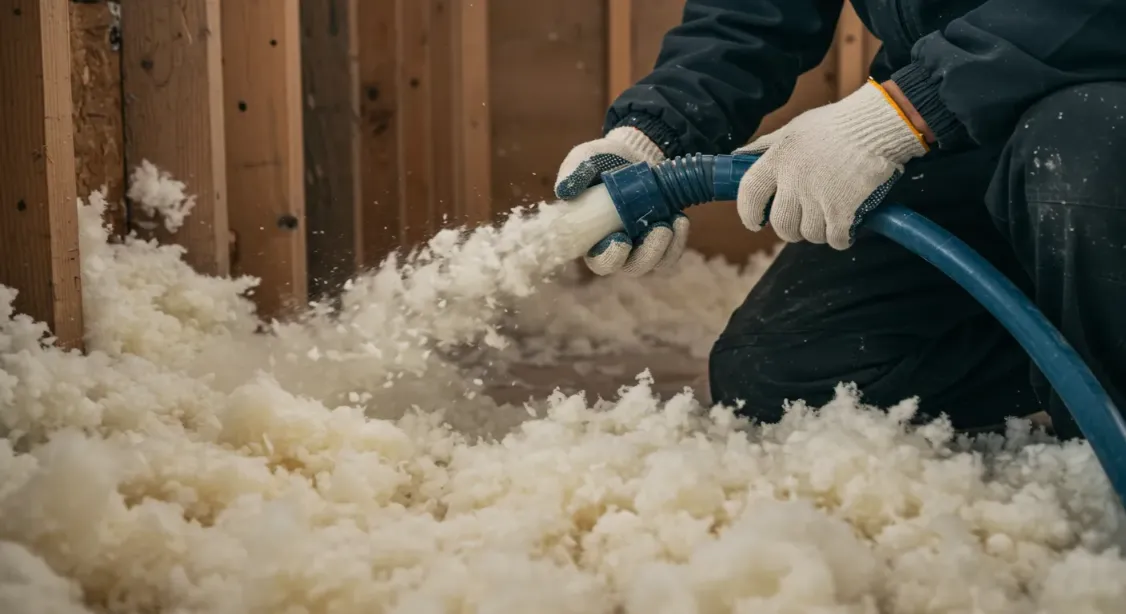
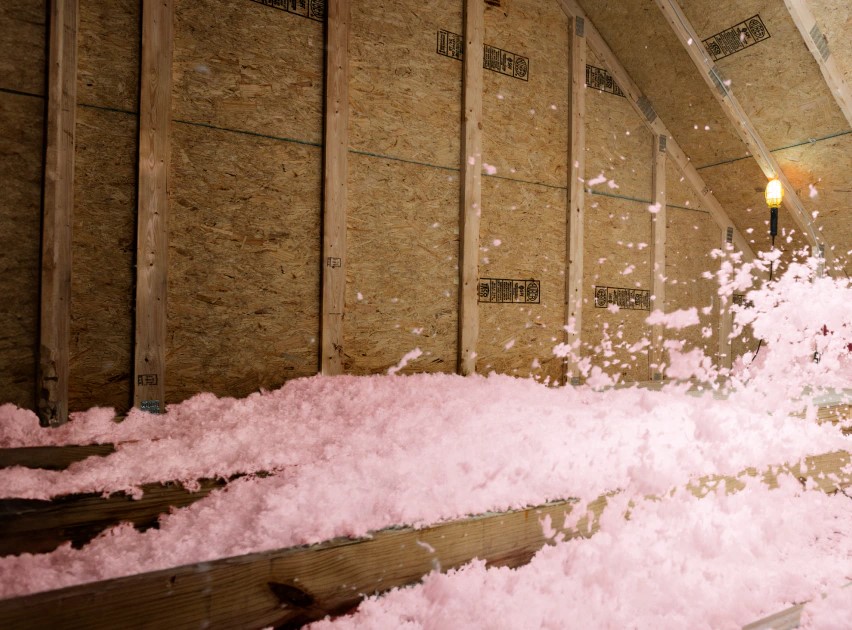
Blown-in insulation, whether cellulose or fiberglass, is installed using a hose and blowing machine that propels material into cavities under pressure. This installation method directly solves the problems that plague old insulation.
Unlike batts that must be cut and fitted around framing, electrical boxes, plumbing, and ductwork, blown-in material flows into every gap and void. It packs tightly around obstacles, eliminating the air bypass paths that make old batt insulation so inefficient. This is especially valuable in older homes with irregular framing, balloon wall construction, or retrofit applications where removing wall finishes is not practical.
Blown-in cellulose in particular provides meaningful air resistance. The dense, interlocking fibers of cellulose fill tiny cracks and gaps that would allow air movement through fiberglass. According to The Conversation’s analysis of insulation retrofit science, proper insulation installation that addresses both thermal resistance and air movement is essential to avoid moisture problems and energy waste in older homes.
Blown-in insulation allows contractors to bring insulation levels up to current standards without tearing out walls. In attics, new blown-in material can be layered directly over old degraded insulation to reach recommended depths. For walls, blown-in can be installed through small holes drilled in exterior or interior surfaces, then patched and finished.
| Insulation Material | R-Value per Inch | Settling Over Time | Air Sealing | Moisture Resistance | Pest Resistance |
|---|---|---|---|---|---|
| Blown-in Cellulose | R-3.2 to R-3.8 | Minimal (dense-pack) | Good | Moderate | Borate-treated |
| Blown-in Fiberglass | R-2.2 to R-2.7 | Noticeable | Fair | Good | Poor |
| Old Fiberglass Batts | R-2.9 to R-3.8 (when new) | Significant sagging | Poor | Poor once wet | Poor |
| Old Cellulose Loose-Fill | R-3.2 to R-3.8 (when new) | Moderate settling | Fair (when settled) | Poor | Varies |
| Spray Foam (closed-cell) | R-6.0 to R-7.0 | None | Excellent | Excellent | Excellent |
The theoretical benefits of blown-in insulation translate into real-world comfort and savings. However, results vary based on home condition, climate, and installation quality.
The DOE estimates that adding insulation to an under-insulated home can reduce heating and cooling costs by 10-15% on average. In homes with severely degraded or missing insulation, savings can reach 20-30%. These savings come from both improved thermal resistance and reduced air infiltration that a blown-in installation provides.
According to the ENERGY STAR attic insulation guide, most homes in the United States are under-insulated by modern standards. The typical older home has between R-11 and R-19 in the attic when it should have R-38 or higher, meaning the existing insulation is providing less than half the thermal resistance needed.
| Scenario | Home Type | Problem Found | Blown-in Solution Applied | Outcome |
|---|---|---|---|---|
| 1960s ranch | 1,400 sq ft attic | R-11 fiberglass batts with 2-inch gaps at every joist, heavy mouse tunneling | Dense-pack cellulose over the existing insulation to R-49 | Heating bill dropped 22%, attic temps stabilized |
| 1980s two-story | 2,100 sq ft with vaulted ceilings | Blown-in fiberglass settled to R-12, with thin spots at the eaves | Additional blown-in cellulose layered to R-60 | Eliminated ice dams, upstairs bedrooms are warm in winter |
| 1940s Cape Cod | Balloon framing, no wall insulation | Drafty walls, visible gaps around framing | Blown-in cellulose dense-packed through exterior holes | Drafts eliminated, 18% reduction in gas usage |
| 1970s split-level | 1,800 sq ft with crawl space | Compressed fiberglass in floors, moisture damage from plumbing leak | Removed damaged insulation, installed blown-in fiberglass to R-30 | Floors warm to the touch, crawl space humidity reduced |
| 1990s colonial | Finished basement, cold floors above | Inadequate R-11 between floor joists, gaps around duct work | Blown-in fiberglass to R-38 between joists | Basement comfort improved significantly |
Contractors who specialize in insulation retrofits can improve outcomes and close more jobs by following these practical steps.
Walk every attic and crawl space before quoting. Use a flashlight, camera, and moisture meter. Document visible problems like settled insulation, water stains, pest damage, and inadequate coverage. Show homeowners photos of their actual insulation condition. Visual evidence closes deals far more effectively than theoretical R-value discussions.
Blown-in insulation works best when combined with air sealing. Caulk and seal penetrations around plumbing stacks, electrical wire runs, recessed light housings, and duct chases before blowing in material. Air sealing the attic floor before adding insulation is one of the highest-ROI combinations available in residential energy upgrades.
Cellulose performs better in walls and dense-pack applications due to its higher density and better air sealing. Fiberglass is often preferred for attics where moisture is a concern and where a lighter material is advantageous. Match the material to the cavity, climate, and homeowner priorities rather than defaulting to a single product.
In colder climates, adding insulation to walls changes the temperature profile of the wall assembly and can shift the dew point. Follow Building Science Corporation guidance on vapor control to determine whether a vapor retarder is needed and where it should be placed. Getting this wrong can cause moisture damage that is worse than the original uninsulated condition.
The Inflation Reduction Act’s Section 25C tax credit covers 30% of insulation material and installation costs up to $1,200 annually through 2032. Make sure homeowners know about this incentive when reviewing proposals. The credit applies to insulation that meets or exceeds current International Energy Conservation Code (IECC) requirements, which blown-in cellulose and fiberglass both achieve at proper depths.
After installation, measure insulation depth at multiple points across the attic or wall area and record the resulting R-value on the invoice. This documentation is valuable for the homeowner’s records, supports tax credit claims, and provides proof of work for future real estate transactions.
Not every blown-in installation delivers the same results. These variables determine how well the material performs in practice.
Upgrading old, failing insulation to blown-in material is one of the smartest investments a homeowner can make for comfort, energy savings, and property value. High Country Solution provides professional insulation assessments and blown-in installations tailored to your home’s specific needs, building age, and climate zone requirements. Our team evaluates your existing insulation, identifies air sealing opportunities, and recommends the right material and depth to meet or exceed current energy standards.
Call us at (307) 248-9063 or email [email protected] to get started. Every day with failing insulation is a day you are paying more than necessary to heat and cool your home.
Yes, in most attic applications, blown-in cellulose or fiberglass can be installed directly over existing material as long as the old insulation is dry, free of mold, and not contaminated by pests. If the existing insulation is wet, moldy, or contains animal waste, it must be removed first. A moisture inspection should always precede a layer-over installation.
Properly installed blown-in cellulose typically lasts 30 to 50 years without significant settling when dense-packed. Blown-in fiberglass can last 20 to 30 years but may settle more over time. By comparison, old fiberglass batts often begin failing within 15 to 20 years due to sagging, gaps, and moisture exposure. The denser the installation, the longer it maintains its R-value.
Blown-in cellulose is treated with borate fire retardants and is actually more fire-resistant than fiberglass. However, if a home has knob-and-tube wiring, most building codes require that the wiring be replaced before installing any insulation around it, including blown-in. Modern wiring (ROMEX) is safe to insulate around without concern. Always have an electrician inspect older wiring before any insulation retrofit.
It can help significantly. Ice dams form when heat escapes through the attic and warms the roof deck, melting snow that refreezes at the colder eaves. Adding blown-in insulation to the attic floor reduces this heat loss. For the best results, attic air sealing should be combined with proper insulation depth and adequate soffit ventilation. Homes with chronic ice dams often need all three measures together.
Blown-in cellulose is significantly less expensive than spray foam and is installed through small holes that are easily patched. It provides R-3.2 to R-3.8 per inch compared to spray foam’s R-3.5 to R-7.0 per inch, depending on open or closed cell. Spray foam provides better air sealing and moisture resistance, but costs two to three times more per square foot. For most retrofit budgets, dense-pack cellulose delivers the best balance of performance and value.