Mineral Wool Insulation vs Fiberglass: What Homeowners Should Choose
admin-high
March 30th, 2026
Mineral wool insulation is the better overall choice for homeowners who prioritize fire resistance, moisture protection, sound control, and long-term performance. Fiberglass remains the more budget-friendly option and works well for standard attic and wall projects where upfront cost is the primary concern. Mineral wool delivers 22 to 37% higher R-value per inch, withstands temperatures up to 2,000°F compared to fiberglass at roughly 1,200°F, and is naturally hydrophobic, so it will not absorb moisture and lose effectiveness over time. Fiberglass costs roughly $0.50 to $1.20 per square foot installed, while mineral wool runs $1.50 to $2.00 per square foot installed, making the decision largely a question of budget versus long-term building performance. This cost and performance trade-off is often detailed in retailer guides, such as Lowe’s – Mineral Wool vs Fiberglass Insulation: A Buyer’s Guide.
TLDR / Key Takeaways
Mineral wool R-values range from R-3.7 to R-4.3 per inch, compared to fiberglass at R-2.9 to R-3.8 per inch, giving mineral wool a 22-37% thermal advantage per inch of thickness.
Installed cost per square foot is $0.60 to $1.20 for fiberglass versus $1.50 to $2.00 for mineral wool, making fiberglass the clear winner on upfront cost.
Fire resistance is not close: mineral wool withstands up to 2,000°F and has zero flame spread, while fiberglass melts around 1,200°F.
Moisture resistance heavily favors mineral wool, which is hydrophobic and repels water, while fiberglass can hold moisture, sag, and lose insulating power.
Sound attenuation is noticeably better with mineral wool due to its higher density and superior NRC ratings.
Installation difficulty is higher with mineral wool because it is heavier, denser, and requires a sharp utility knife for cutting.
Long-term performance favors mineral wool because it resists compression and thermal drift better than fiberglass, which can sag and degrade over time.
Best use case for fiberglass: budget-sensitive new construction, large attics, and projects where code minimum R-values are sufficient.
Best use case for mineral wool: sound-critical rooms, fire-rated assemblies, basement walls, and homeowners investing in long-term durability.
How Mineral Wool and Fiberglass Insulation Work
Both materials function as thermal barriers by trapping air in tiny pockets within their fibers, slowing heat transfer between the interior and exterior of a home, which is why mineral-based insulation systems play a critical role in overall energy performance. The manufacturing processes, however, are quite different.
Fiberglass is made by spinning molten glass into fine fibers and binding them with a resin. It has been the standard residential insulation material for decades and is widely available at any home center. It comes in batts, rolls, and loose-fill forms.
Mineral wool, sometimes called rock wool or stone wool, is produced by melting basalt or slag at extreme temperatures and spinning it into dense fibers. The resulting product is significantly heavier and more rigid than fiberglass, which contributes to its superior performance in fire resistance, soundproofing, and moisture management. To see how these two materials compare in residential settings, including installed cost ranges, consult Today’s Homeowner – Rockwool vs Fiberglass: Which Insulation Is Better?.
According to Johns Manville’s head-to-head comparison, JM’s mineral wool batt products offer R-15 at 3.5 inches, outperforming comparable fiberglass batts at the same thickness.
Head-to-Head Performance Comparison
Factor
Fiberglass
Mineral Wool
R-value per inch
R-2.9 to R-3.8
R-3.7 to R-4.3
Fire resistance
Melts at ~1,200°F
Withstands up to 2,000°F, zero flame spread
Moisture resistance
Absorbs water, can sag and lose R-value
Hydrophobic, repels water, maintains R-value
Sound absorption
Moderate NRC rating
Higher NRC rating due to density
Weight
Lightweight, easy to handle
Heavy, dense, more difficult to cut and install
Compression resistance
Can compress and lose effectiveness
Resists compression well
Thermal drift
More susceptible over time
Better resistance to thermal drift
Typical installed cost
$0.60 to $1.20 per sq ft
$1.50 to $2.00 per sq ft
Availability
Nearly universal
Growing but less universal than fiberglass
Environmental
Contains recycled glass
Made from abundant basalt/slag, some recycled content
Cost Breakdown: What Homeowners Actually Pay
Cost is the single biggest reason homeowners still choose fiberglass over mineral wool. The material price difference is significant, and the gap widens when you factor in labor.
Angi’s comparison data shows that fiberglass typically runs $0.30 to $1.50 per square foot for materials alone, while mineral wool costs $0.80 to $2.50 per square foot. Once installation is included, the total jumps to roughly $0.60 to $1.20 per square foot for fiberglass and $1.50 to $2.00 per square foot for mineral wool.
For a standard 1,500 square foot attic:
Insulation Type
Material Cost
Labor Cost
Total Estimated Cost
Fiberglass (R-30)
$600 to $1,500
$450 to $900
$1,050 to $2,400
Mineral Wool (R-30)
$1,500 to $3,000
$750 to $1,200
$2,250 to $4,200
Line Chart Suggestion: A side-by-side bar chart comparing total installed costs for fiberglass and mineral wool across three common project sizes (1,000 sq ft, 1,500 sq ft, and 2,500 sq ft) to illustrate how the cost gap scales with project size.
Where Mineral Wool Outperforms
Fire resistance is the area where the gap is widest. Mineral wool can serve as a fire stop in wall assemblies and will not contribute to flame spread. In areas where fire codes are strict, such as between attached garages and living spaces, mineral wool is often the specified material. The Craftsman Blog notes that mineral wool can withstand fires up to 2,000°F, compared to fiberglass, which melts around 1,200°F.
Moisture management is another major advantage. Basements and crawl spaces are notoriously damp environments. Fiberglass that absorbs moisture becomes a breeding ground for mold and loses thermal effectiveness. Mineral wool’s hydrophobic properties mean it drains and dries without degrading, making it the superior choice for moisture-resistant insulation in below-grade applications.
Soundproofing is noticeably better with mineral wool. Home offices, media rooms, and bedrooms between shared walls benefit significantly from the denser material. Both products have respectable noise reduction coefficients, but mineral wool consistently outperforms fiberglass in laboratory and real-world acoustic testing.
Where Fiberglass Still Makes Sense
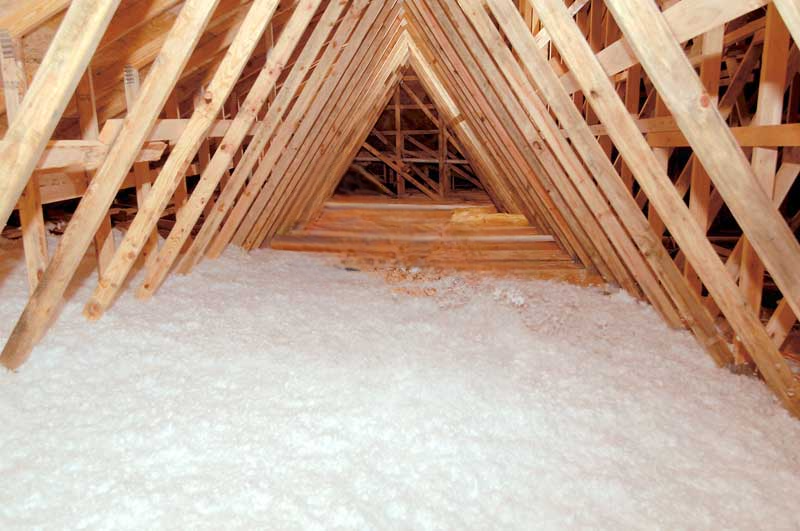
Fiberglass is not a bad product. For the vast majority of standard residential projects, it meets code requirements and does the job at a fraction of the cost. Large attic floor insulation projects, for instance, are typically better served by blown-in fiberglass or fiberglass rolls where the volume of material needed would make mineral wool prohibitively expensive.
Fiberglass is also lighter and easier to work with. A single installer can handle fiberglass batts quickly, cutting down on labor time. Mineral wool’s density, while an advantage for performance, means installers spend more time cutting and fitting each piece, which adds to the labor cost.
For homeowners on a tight budget or builders working on spec homes where every dollar matters, fiberglass delivers adequate performance at a price point that keeps projects financially viable.
Factors That Influence the Decision
Several variables determine which insulation type is the right fit for a specific project:
Climate zone: Colder climates benefit more from mineral wool’s higher R-value per inch, especially in wall cavities where space is limited.
Budget: If cost is the primary driver, fiberglass wins. If long-term value matters more, mineral wool is worth the premium.
Project location within the home: Basement walls, garage separation walls, and sound-critical rooms favor mineral wool. Open attics and standard wall cavities can work with fiberglass.
Existing construction vs. new build: Retrofitting mineral wool into existing wall cavities can be challenging due to its stiffness. Fiberglass is more forgiving in tight retrofit situations.
Fire code requirements: Some jurisdictions and assembly types require fire-rated insulation, which points directly to mineral wool.
Moisture exposure: Any area prone to dampness, including basements, crawl spaces, and bathrooms, is better served by mineral wool.
Contractor experience: Not all insulation contractors regularly install mineral wool. Availability and installer familiarity can influence both cost and quality of the finished job.
Real-World Scenarios
Scenario
Property Type
Recommended Option
Estimated Cost
Finishing a basement with moisture concerns
1990s suburban home
Mineral wool batts (R-15 walls)
$2,500 to $4,000
Insulating a large attic to code minimum
2005 ranch-style home
Blown-in fiberglass (R-38)
$1,200 to $2,000
Building a detached home office for sound isolation
New construction ADU
Mineral wool (R-23 walls, R-30 ceiling)
$4,000 to $6,500
Insulating garage firewall separation
Existing attached garage
Mineral wool (R-15 fire-rated)
$800 to $1,500
Budget re-insulation of exterior walls during siding replacement
1980s two-story
Fiberglass batts (R-13 to R-15)
$1,800 to $3,200
Who Mineral Wool Is Best For (and Who Should Skip It)
Mineral wool is the right choice for:
Homeowners building or renovating in cold climates where maximizing R-value in limited cavity space matters
Anyone insulating basements, crawl spaces, or other below-grade areas with moisture exposure
Homeowners adding sound isolation to home theaters, offices, or bedrooms
Projects requiring fire-rated wall assemblies, such as garage-to-living-space separations
Owners investing in long-term durability and building performance over upfront savings
Mineral wool is NOT the right choice for:
Homeowners with strict budgets who need the most insulation coverage for the lowest total cost
Very large attic projects where the volume of material makes mineral wool cost-prohibitive
DIY installers who may struggle with the heavier, denser material and the sharper cutting tools required
Projects in warm climates where code-minimum R-values are easily met with less expensive materials
Situations where local contractors have limited experience with mineral wool installation
Get Expert Guidance on Your Insulation Project
Choosing between mineral wool and fiberglass is not always straightforward, and the right decision depends on your home, your climate zone, your budget, and your long-term goals. Our team has the experience to assess your specific situation and recommend the insulation type that delivers the best return on investment for your property. We work with homeowners and contractors across a range of project sizes and building types, and we are here to make sure your insulation performs for decades.
Call us at (307) 248-9063 or email [email protected] to discuss your project with a specialist who can walk you through the options in plain language.
FAQs
Can mineral wool be installed over existing fiberglass?
Yes, mineral wool can be installed over existing fiberglass in many cases, particularly in attic floor applications. However, you should avoid compressing either layer, as compressed insulation loses its effective R-value. If the existing fiberglass has been exposed to moisture, pests, or significant settling, it is usually better to remove it before adding new material.
Is mineral wool safe to handle without special equipment?
Mineral wool fibers can cause skin irritation and respiratory discomfort during installation, similar to fiberglass. We recommend wearing long sleeves, gloves, eye protection, and a dust mask when handling either material. Mineral wool does not contain formaldehyde binders in most modern formulations, which is an advantage over some fiberglass products.
How long does mineral wool insulation last?
Mineral wool is one of the most durable insulation materials available. Because it does not absorb moisture, does not settle or sag over time, and resists compression, it can maintain its rated R-value for 50 years or more with no degradation. Fiberglass, by comparison, can lose effectiveness if exposed to moisture or if it sags in wall cavities.
Does mineral wool actually make a noticeable difference in soundproofing?
Yes, the difference is measurable and noticeable. Mineral wool’s higher density provides better sound attenuation across a wider range of frequencies compared to fiberglass. In party walls between rooms, homeowners typically report a significant reduction in transmitted noise. For the best results, mineral wool should be combined with proper sealing, resilient channels, and appropriate drywall techniques.
Is the extra cost of mineral wool worth it for a standard bedroom-to-bedroom wall?
For a standard interior partition where basic sound separation is the goal, the cost premium of mineral wool may not be justified. Fiberglass with proper air sealing will provide adequate noise reduction for most residential situations. Mineral wool becomes worth the upgrade in scenarios involving home theaters, recording spaces, noisy mechanical rooms, or bedrooms adjacent to high-traffic living areas.