Installing Fiberglass Insulation Correctly: Step-by-Step Guidance
Installing fiberglass insulation properly comes down to three fundamentals: selecting the right R-value for your climate zone, preparing the work…


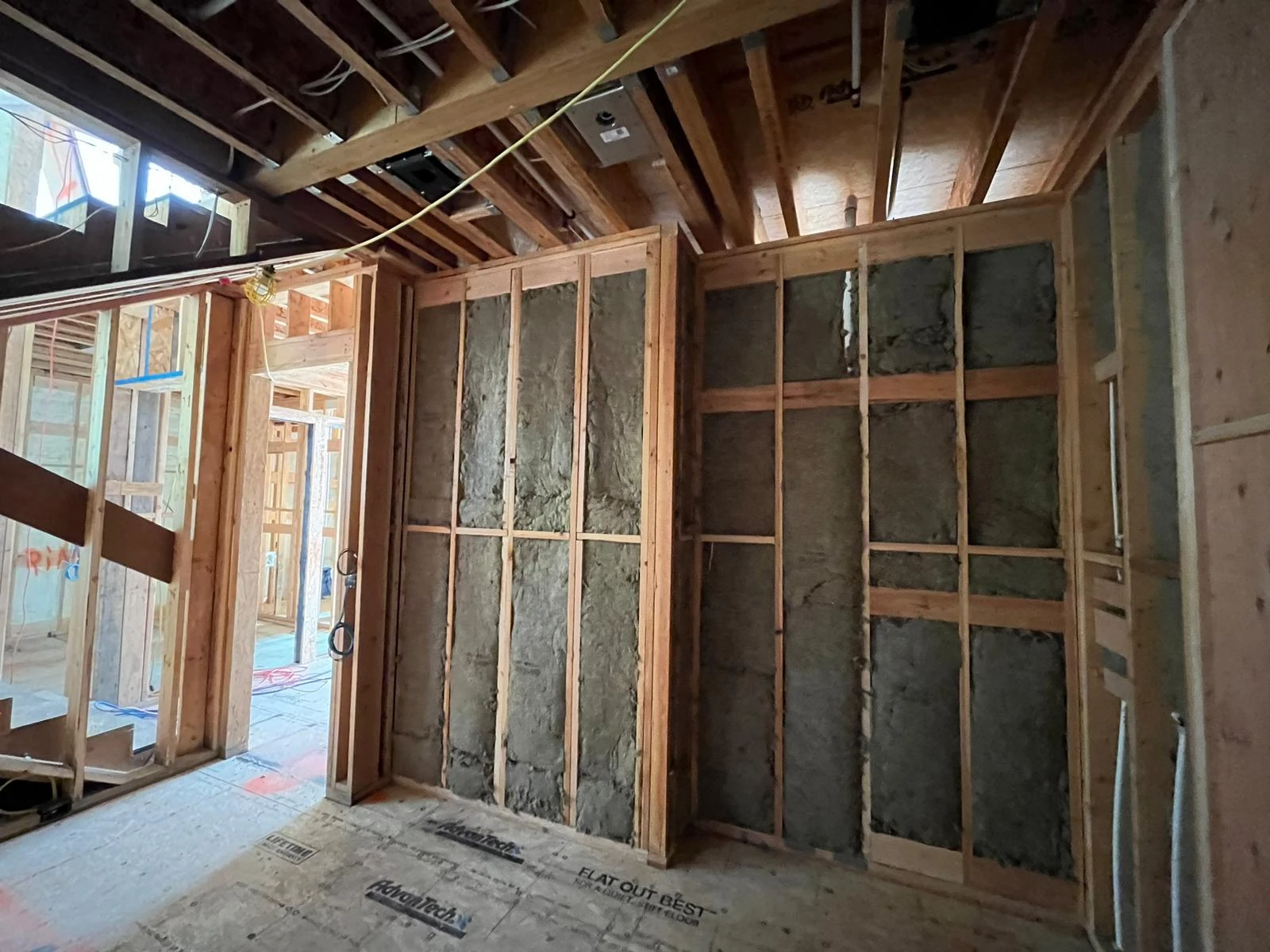
Homes in Evanston lose energy primarily through air leaks, inadequate insulation in walls and attics, and poor thermal performance of outdated materials like aged fiberglass. According to the U.S. Department of Energy, proper insulation provides resistance to heat flow and directly lowers heating and cooling costs. In Evanston’s cold, windy climate zone 5, mineral wool insulation addresses these losses by delivering higher R-values per inch than standard fiberglass, superior fire resistance, excellent moisture management, and sound attenuation, making it one of the most effective upgrades available for older homes in the area.
Evanston sits in ASHRAE climate zone 5, where winter temperatures regularly drop below freezing, and wind chill off Lake Michigan compounds heat loss. Homes built before 2000, which make up the majority of Evanston’s housing, were insulated to standards far below what current building science recommends.
Energy escapes through multiple pathways in these homes:
The Illinois Green Alliance notes that Evanston’s city council adopted a stretch energy code in February 2025, making it the first Illinois city to do so. This ordinance requires large buildings to reach net-zero carbon emissions by 2050, signaling that energy efficiency is becoming a regulatory priority, not just a homeowner preference.
| Loss Pathway | Estimated Heat Loss Contribution | Common Cause in Evanston Homes |
|---|---|---|
| Attic / Roof | 25-30% | Settled fiberglass, insufficient depth, missing air barrier |
| Walls | 20-25% | Gaps around batts, settled insulation, no continuous insulation |
| Windows and Doors | 10-15% | Single-pane glass, worn weatherstripping, poor caulking |
| Basement / Rim Joist | 15-20% | Uninsulated rim joists, bare foundation walls |
| Ductwork and Penetrations | 10-15% | Leaky ducts in unconditioned spaces, unsealed penetrations |
Bar Chart Suggestion: A stacked bar chart comparing estimated heat loss percentages across these five pathways for a typical pre-1990 Evanston home, with the attic/roof category highlighted as the largest contributor.
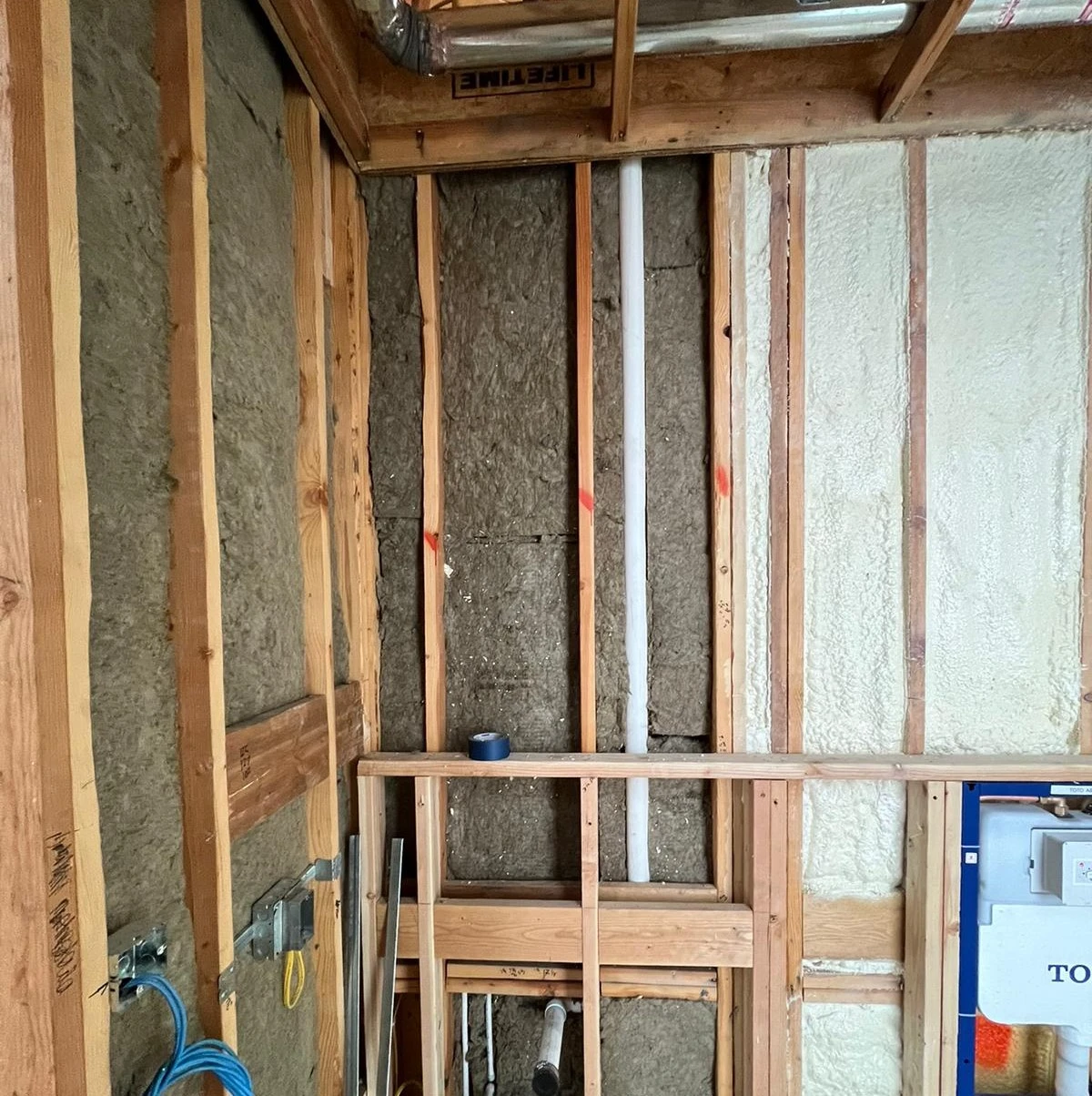
Mineral wool, sometimes called rock wool or stone wool, is made from basalt rock and recycled slag that is melted at temperatures around 3,000°F and spun into fibers. The resulting material is dense, fibrous, and packed into batts or boards used for mineral-based insulation solutions in residential and commercial construction.
It differs from fiberglass in several important ways. Fiberglass is made from spun glass fibers and typically delivers R-2.9 to R-3.8 per inch. Mineral wool, by comparison, delivers R-3.7 to R-4.3 per inch, giving it a measurable thermal advantage in the same cavity space. Mineral wool is also significantly denser, which gives it better sound-dampening properties and a natural resistance to air movement through the material.
According to the Insulation Institute, mineral wool falls into a category of insulation types that includes fiberglass, cellulose, and spray foam, each with distinct performance characteristics suited to different applications.
| Property | Mineral Wool | Fiberglass | Closed-Cell Spray Foam | Open-Cell Spray Foam | Cellulose |
|---|---|---|---|---|---|
| R-Value per Inch | 3.7-4.3 | 2.9-3.8 | 6.0-7.0 | 3.5-3.7 | 3.2-3.8 |
| Fire Resistance | Non-combustible to 2,000°F+ | Melts around 1,000°F | Burns with toxic smoke | Burns readily | Treated, but still combustible |
| Moisture Resistance | Repels water, allows vapor diffusion | Absorbs moisture, loses R-value | Acts as a vapor barrier | Absorbs water | Absorbs moisture, can compact |
| Sound Damping | Excellent (high density) | Moderate | Good | Moderate | Good |
| Air Sealing | Moderate (needs detailing) | Poor (needs a separate air barrier) | Excellent (full air barrier) | Good (partial air barrier) | Poor (needs a separate air barrier) |
| Installed Cost (per sq ft) | $$ | $ | $$$$ | $$$ | $ |
Bar Chart Suggestion: A side-by-side bar chart comparing R-value per inch across all five insulation types, with closed-cell spray foam and mineral wool highlighted for Evanston homeowners deciding between performance and cost.
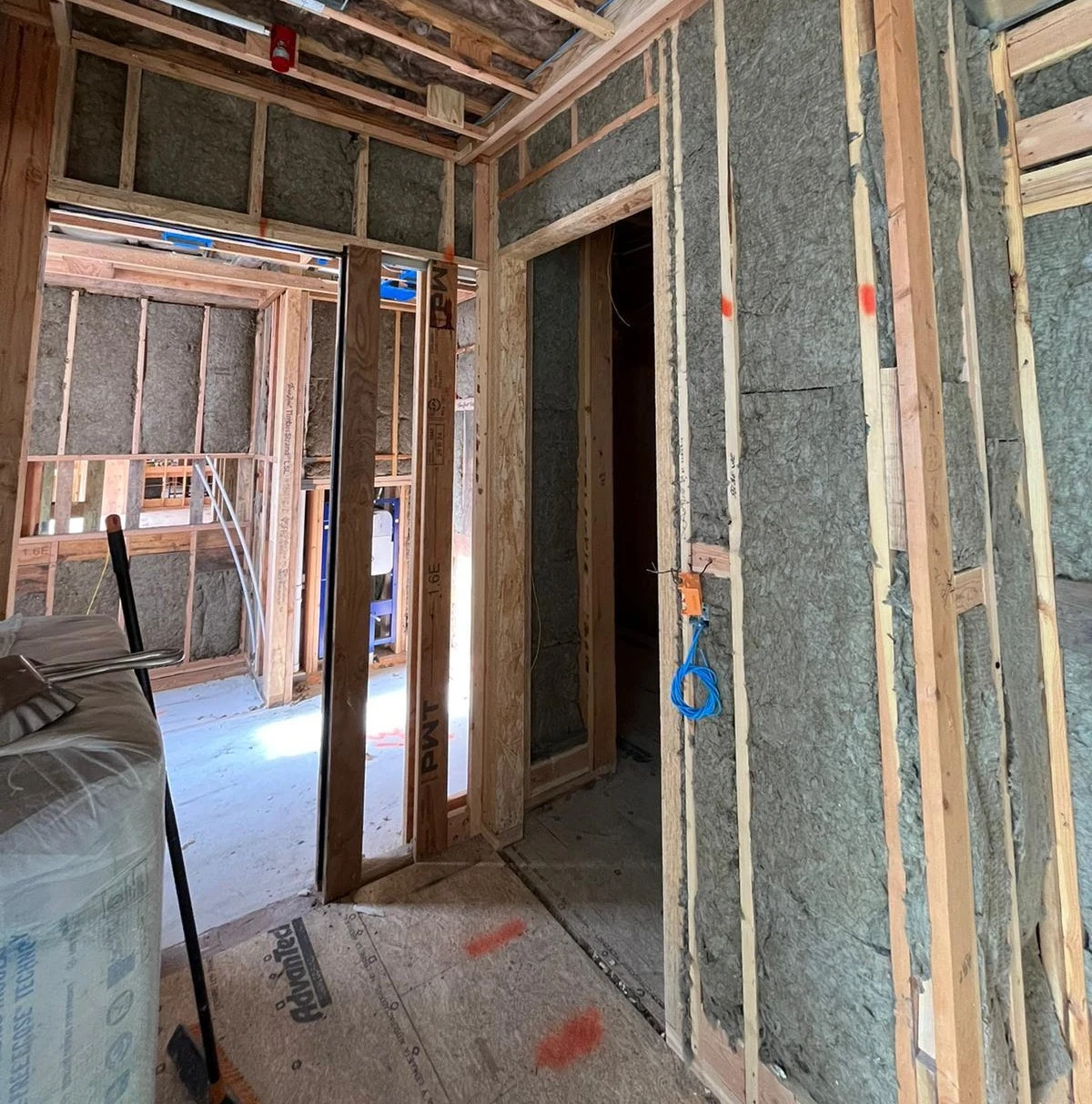
Evanston’s older homes typically have 2×4 wall framing with 3.5-inch cavities. Standard fiberglass batts in these cavities deliver R-11 to R-13. Mineral wool batts at the same thickness deliver R-15, a meaningful improvement that reduces heat transfer through the wall assembly by roughly 15-20%. For 2×6 construction with 5.5-inch cavities, mineral wool reaches R-23 compared to R-19 for fiberglass, making it one of the most efficient insulation options.
This matters in climate zone 5, where the DOE recommends R-13 to R-20 for wall cavities in existing homes and up to R-20 to R-23 for new construction. Mineral wool helps existing homes reach the upper end of those recommendations without requiring wall thickening or expensive exterior rigid insulation retrofits.
Mineral wool is non-combustible. It does not burn, melt, or produce toxic smoke when exposed to extreme heat. This is particularly relevant in older Evanston homes where knob-and-tube wiring or aging electrical systems can pose fire risks. Mineral wool batts can act as a fire barrier, slowing flame spread through wall cavities and providing additional time for occupants to evacuate. Fiberglass, by contrast, begins to soften and melt around 1,000°F, offering far less protection.
Lake Michigan’s proximity means Evanston homes deal with high humidity in summer and cold, dry air in winter. This creates conditions where moisture can condense inside wall cavities, leading to mold growth and wood rot. Mineral wool manages this challenge through its hydrophobic fibers that repel liquid water while still allowing water vapor to pass through. This means if moisture does enter a wall cavity, mineral wool will not absorb it as fiberglass or cellulose would, and it will not trap it the way a vapor-impermeable material like closed-cell spray foam can.
The result is a wall assembly that dries more effectively, reducing the long-term risk of mold and structural damage.
Evanston is a dense, urban suburb with proximity to the CTA Purple Line, Northwestern University activity, and busy corridors like Chicago Avenue and Dempster Street. Mineral wool’s high density gives it a Noise Reduction Coefficient (NRC) of 0.90 to 0.95, meaning it absorbs 90-95% of sound energy that contacts it. This makes it noticeably more effective than fiberglass at reducing noise transmission through walls, a practical benefit that goes beyond energy savings.
| Scenario | Home Type | Problem | Solution | Outcome |
|---|---|---|---|---|
| 1920s Bungalow near Dempster St. | 2×4 walls, unfinished attic | Fiberglass batts had settled to R-8 in walls; the attic had R-11 blown fiberglass | Removed old batts, installed R-15 mineral wool in walls, added R-49 mineral wool in attic | Homeowner reported 22% reduction in winter heating bills and a noticeably quieter interior |
| 1960s Ranch in northwest Evanston | 2×4 walls, insulated attic, uninsulated rim joist | Cold floors, ice dams on the north-facing roof, high gas bills | Dense-packed mineral wool in rim joist bays, mineral wool over existing attic insulation, and air sealing at penetrations | Ice dams eliminated, first-floor floor temperature increased by 6°F |
| 1940s Two-Flat near downtown | 2×4 walls between units, original plaster | Sound transmission between units, drafts, and uneven heating | Mineral wool in party walls and exterior walls, air sealed all penetrations | Tenant complaints about noise dropped significantly, and heating costs reduced 18% |
| 1970s Split-Level near Lighthouse Beach | 2×4 walls, finished basement | Moisture damage in the basement walls, musty smell, and fiberglass had absorbed water | Removed wet fiberglass, applied mineral wool batts with appropriate vapor retarder | Moisture issues resolved, the basement became a usable living space year-round |
Before recommending any insulation, conduct or commission a blower door test and thermal imaging scan. This identifies exactly where air leaks occur and where insulation is missing or damaged. In Evanston, Nicor Gas and ComEd periodically offer rebates for energy audits, which can offset the upfront cost.
Mineral wool reduces conductive and convective heat transfer, but it is not an air barrier on its own. Seal all penetrations, rim joist gaps, top plates, and window rough openings with caulk, spray foam, or appropriate sealant before installing mineral wool batts. The combination of air sealing plus mineral wool outperforms either measure alone.
Since attics account for the largest share of heat loss, upgrading attic insulation offers the fastest payback. For Evanston homes, aim for at least R-49 in the attic, which can be achieved with approximately 10 to 11 inches of mineral wool batts or a combination of mineral wool and blown-in insulation.
Rim joists are one of the most under-insulated areas in any home. Cut mineral wool batts to fit snugly between rim joist bays and seal all edges. This alone can reduce air infiltration by 10-15% and eliminate the cold-floor complaints common in Evanston ranches and split-levels.
In Evanston’s climate zone 5, interior vapor retarders are often recommended but not always required, depending on the wall assembly. Mineral wool’s vapor-permeable nature means it works well with a Class II or Class III vapor retarder on the interior side. Avoid using foil-faced or polyethylene vapor barriers with mineral wool unless a building scientist has specifically designed the assembly, as this can trap moisture.
Mineral wool costs more per square foot than fiberglass, typically 20-30% more for material alone. However, when factoring in the higher R-value, fire resistance, sound damping, and moisture management, the lifetime value exceeds the initial premium. Frame the conversation around total cost of ownership, comfort improvements, and safety benefits rather than material cost alone.
High Country Solution provides professional insulation consulting and installation guidance for homeowners and contractors throughout the Evanston area. Whether you are retrofitting a 1920s bungalow or planning new construction, our team can help you select the right insulation strategy for maximum energy savings, comfort, and code compliance.
Contact us at [email protected] or call (307) 248-9063 to discuss your project. We help you make informed insulation decisions that protect your home for decades.
Yes, for most Evanston homeowners. Mineral wool delivers 15-20% higher R-value in the same cavity space, is non-combustible, manages moisture better, and provides superior sound damping. The upfront material premium typically pays for itself through energy savings and reduced maintenance costs within 5 to 8 years.
In attics, mineral wool batts can be installed over existing fiberglass if the existing insulation is dry, intact, and free of mold or pests. In wall cavities, existing fiberglass should be removed and replaced rather than layered, as compression reduces effectiveness and can create moisture traps.
It depends on the specific wall assembly. In most climate zone 5 applications, a Class II vapor retarder (such as kraft-faced mineral wool) on the warm side of the wall is sufficient. Full vapor barriers like polyethylene sheeting are generally not recommended with mineral wool unless specified by a building science professional, because they can trap moisture and prevent drying.
Mineral wool fibers are hydrophobic, meaning they repel liquid water while remaining vapor-permeable. This combination works well in Evanston’s humid summers because the material does not absorb moisture the way fiberglass or cellulose can, and it allows any incidental moisture in the wall cavity to dry out through vapor diffusion.
Mineral wool batts can be installed by experienced DIY homeowners in accessible areas like attics and open wall cavities. However, rim joist installations, retrofit wall applications in closed cavities, and any project requiring air sealing work are best handled by a professional insulation contractor who can verify proper fit, seal all penetrations, and ensure code compliance.