Why ventilation is a critical partner to your insulation system in Idaho Falls, ID
Ventilation and insulation work as an essential team in Idaho Falls homes, where insulation keeps heat in during winter and…


Faced insulation has a vapor barrier (typically kraft paper or foil) attached to one side, while unfaced insulation has no barrier and is just the insulation material itself. This fundamental difference affects moisture control, installation methods, and which applications each type suits best. The presence or absence of a facing material determines where you can safely install each type without risking moisture problems or reduced performance.
Choosing the right insulation type for Jackson Hole’s climate requires understanding how these materials perform in cold winters and variable humidity conditions. High Country Solution has extensive experience with insulation installations throughout southeastern Idaho, providing practical insights into what works best for local homes and buildings. This guide will explain the technical differences, practical applications, and decision-making factors to help property owners make informed choices.
Faced insulation includes a vapor barrier material attached to one side, typically kraft paper with asphalt or a foil facing. The vapor barrier stops moisture from passing through the insulation, preventing condensation within wall cavities and ceiling spaces. This protection is significant in Jackson Hole’s climate, where temperature differences between interior and exterior spaces can drive moisture through building materials.
The facing material also serves as a fastening surface during installation. Installers staple the flanges of kraft-faced insulation to wall studs or ceiling joists, making the installation process faster and more secure. The facing indicates which direction the insulation should face – always toward the warm-in-winter side of the building cavity. In Jackson Hole homes, this typically means facing the interior living space.
Faced insulation works best in exterior walls, ceilings below unconditioned attics, and floors over unconditioned crawl spaces. These locations benefit from moisture control, especially in areas where indoor humidity levels might be higher during the winter months when people keep windows closed.
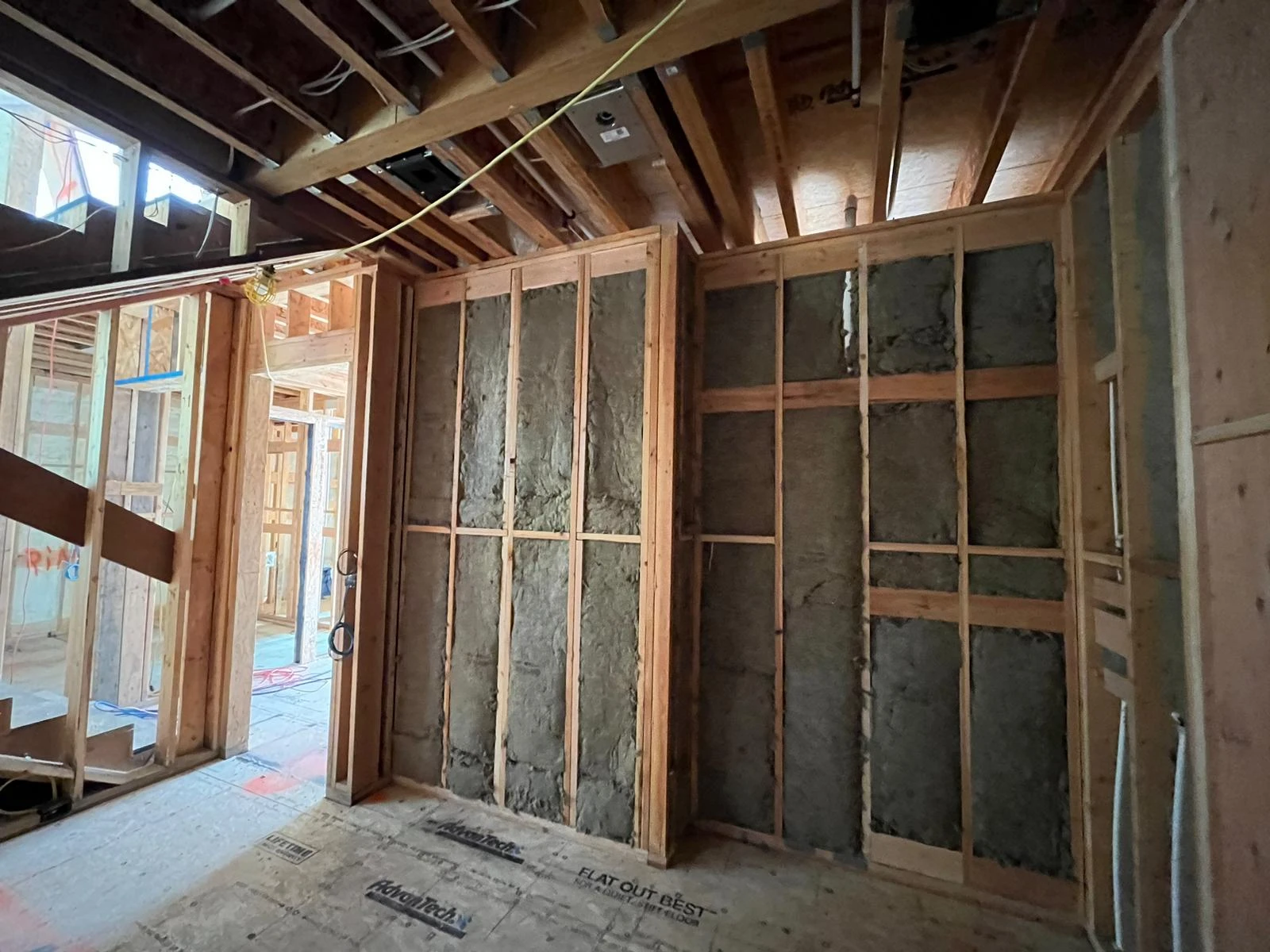
Unfaced insulation consists solely of the insulating material without any attached vapor barrier. Manufacturers typically make it from fiberglass, rock wool, or cellulose fibers formed into batts, rolls, or loose-fill configurations. Without a facing, unfaced insulation allows moisture vapor to pass through more freely, which can be advantageous in certain applications.
The main advantage of unfaced insulation lies in its versatility. Since it lacks a vapor barrier, you can install it anywhere without worrying about trapping moisture between vapor barriers. This makes it ideal for interior walls, attic floors over existing insulation, or renovation projects where you’re adding insulation to already insulated cavities. Unfaced insulation also works well when you plan to install a separate polyethylene vapor barrier according to local building codes.
Installation requires different techniques than faced insulation. Without flanges to staple, installers must use friction-fit methods, wire supports, or mechanical fasteners to hold the material in place. This can take more time but allows for more flexible placement and tighter fitting around obstacles like electrical boxes and plumbing.
| Feature | Faced Insulation | Unfaced Insulation |
|---|---|---|
| Vapor Barrier | Built-in facing material | None (requires a separate barrier) |
| Best Applications | Exterior walls, ceilings, and floors over crawl spaces | Interior walls, attic top-ups, renovation projects |
| Installation Method | Staple flanges to framing | Friction-fit or mechanical fastening |
| Cost | 10-20% more expensive than unfaced versions | Less expensive per square foot |
| Moisture Control | Blocks vapor transmission | Allows vapor transmission |
| R-Value | Slightly higher due to the facing material | Standard R-value for material thickness |
The cost difference between these insulation types varies by manufacturer and region. According to data from the North American Insulation Manufacturers Association, faced insulation typically costs between $0.88 and $1.20 per square foot for R-19 wall insulation, while unfaced insulation costs between $0.75 and $1.05 per square foot. These differences add up in larger projects but might be worth it for the moisture protection benefits in Jackson Hole’s climate.
Jackson Hole’s climate presents specific challenges for insulation selection. Located in southeastern Idaho, Jackson Hole experiences cold winters with average January temperatures around 22°F and moderate summers with July averages near 72°F. This temperature swing creates significant potential for condensation within building assemblies during the heating season.
The local building codes for Bonneville County require specific R-values for different parts of homes. According to the International Energy Conservation Code adopted by Idaho, walls need R-20 insulation, ceilings need R-49, and floors need R-30 insulation. These requirements often determine insulation thickness regardless of whether you choose faced or unfaced materials.
Soil conditions in the Jackson Hole area also affect insulation decisions. Many local homes have basements or crawl spaces with higher moisture levels due to the area’s clay-heavy soils and occasional water table fluctuations. In these cases, faced insulation in walls adjacent to these spaces can provide valuable moisture protection, while unfaced insulation might be better for interior partitions where moisture transfer between rooms is desirable.
Several factors should influence your choice between faced and unfaced insulation for your Jackson Hole property. Climate compatibility tops the list – the significant temperature differences between indoor and outdoor spaces in Jackson Hole winters make moisture control a priority in exterior assemblies.
Existing construction conditions matter significantly. If you’re insulating a new addition where you control all layers, faced insulation provides built-in moisture protection. However, if you’re adding insulation to an existing wall that already has a vapor barrier, using unfaced insulation prevents trapping moisture between two vapor barriers.
Building material compatibility affects your choice. Faced insulation works well with wood framing and standard construction methods, but might not adhere properly to metal studs without special fasteners. Unfaced insulation adapts better to irregular framing, renovation projects, and situations where you need custom fitting around obstacles.
Long-term maintenance considerations also play a role. Faced insulation can be more difficult to remove or modify because the vapor barrier may tear during removal. Unfaced insulation allows easier future access for electrical work, plumbing repairs, or insulation upgrades.
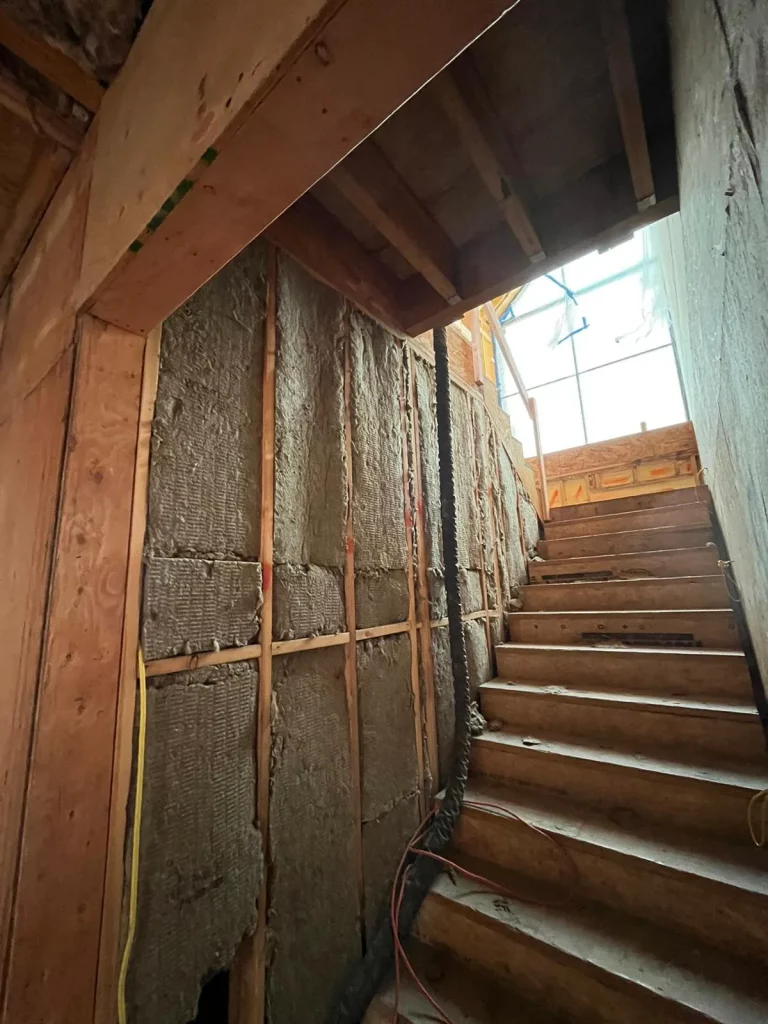
Here are practical tips from extensive insulation work in southeastern Idaho: When installing faced insulation on exterior walls, ensure complete coverage of the vapor barrier, with no gaps or tears. Even small openings can allow significant moisture passage over time. Use construction tape to seal any seams between faced insulation pieces.
For attic insulation in Jackson Hole homes, consider using unfaced insulation on top of existing faced insulation to improve R-values without creating double vapor barriers. This top-up approach works well for older homes that need upgrading to current energy standards.
In rooms with high humidity, like bathrooms and laundry areas, use unfaced insulation with a separate continuous vapor barrier on the warm side. This provides better moisture protection than relying on the sometimes-porous paper facings of standard faced insulation.
The choice between faced and unfaced insulation ultimately depends on your specific application, existing construction conditions, and moisture control needs. Faced insulation provides built-in moisture protection for exterior walls and other assemblies where condensation risk exists. Unfaced insulation offers greater flexibility for interior applications, renovation projects, and situations where you need to avoid double vapor barriers.
Evaluate your project’s requirements carefully, considering Jackson Hole’s climate patterns and your home’s specific construction details. The right insulation choice will improve comfort, reduce energy costs, and prevent moisture problems for decades to come. When in doubt, consulting with a local insulation professional who understands southeastern Idaho conditions can help ensure the best decision for your specific situation.
High Country Solution provides expert insulation services throughout the Jackson Hole area, helping homeowners choose and install the right materials for their specific needs. For professional guidance on selecting between faced and unfaced insulation, or to schedule an installation consultation, contact the team at [email protected] or call (307) 248-9063. Local experience matters when dealing with Idaho’s climate challenges and building requirements.
No. Installing faced insulation backward defeats the purpose of the vapor barrier. The facing must always face the warm-in-winter side of the assembly, which in Jackson Hole homes means facing the interior living space.
Unfaced insulation typically provides slightly better sound control because the facing material can create an additional air gap that reduces sound transmission. The difference is minimal but noticeable in some applications.
It depends on the specific conditions. For vented crawl spaces, unfaced insulation between floor joists often works well. For unvented crawl spaces, faced insulation on foundation walls or rigid foam board might be more appropriate.
Yes, many projects use both types strategically. Faced insulation works well in exterior walls, while unfaced insulation might be better for interior partitions or attic top-ups over existing insulation.
Both faced and unfaced insulation can last 50-100 years when protected from moisture and physical damage. The facing material on faced insulation may deteriorate faster than the insulation itself, especially in damp conditions.