Why ventilation is a critical partner to your insulation system in Idaho Falls, ID
Ventilation and insulation work as an essential team in Idaho Falls homes, where insulation keeps heat in during winter and…



Modern blown-in insulation provides substantial health and safety advantages that go far beyond basic temperature regulation. It actively protects homes from fire hazards, prevents moisture buildup and mold growth, improves indoor air quality, and creates a healthier living environment by sealing gaps where allergens and pollutants can enter. These systems use advanced materials like cellulose treated with fire retardants, fiberglass with formaldehyde-free binders, and mineral wool with natural moisture resistance to deliver protection that traditional insulation methods often lack.
This guide breaks down exactly how today’s blown-in insulation systems safeguard your family’s health and property, drawing on years of field experience with various insulation materials and installation techniques. Understanding these benefits helps homeowners make informed decisions about their insulation needs while prioritizing safety and indoor air quality.
The health advantages of properly installed blown-in insulation start with its ability to create a complete thermal barrier. Unlike batts and rolls that leave gaps, blown-in material conforms to every space, preventing air leaks that can bring in dust, pollen, and other outdoor pollutants. This comprehensive seal reduces allergen infiltration by up to 50% in many homes, according to research from building science experts.
Moisture control represents another critical health benefit. Modern blown-in cellulose insulation contains borate treatments that actively resist mold growth and discourage pest infestations. When installed correctly, these systems help maintain consistent humidity levels between 30-50%, which the Environmental Protection Agency identifies as the optimal range for preventing dust mites, mold, and bacteria growth.
Bonus tip: In humid climates, pair blown-in insulation with proper ventilation to maximize moisture management benefits and prevent condensation issues in wall cavities.
The material composition of today’s blown-in insulation products has evolved significantly. Many manufacturers now use formaldehyde-free binders and recycled content, reducing volatile organic compound (VOC) emissions. Data from theInsulation Institute shows that modern cellulose insulation contains 85% recycled material and emits minimal VOCs compared to traditional fiberglass products.
Fire safety stands out as one of the most compelling advantages of blown-in insulation, particularly cellulose varieties. When treated with borate-based fire retardants, cellulose insulation forms a char barrier upon flame exposure, slowing fire spread and providing crucial escape time. Testing from independent laboratories demonstrates that properly installed cellulose can increase a wall’s fire resistance by up to 60 minutes compared to uninsulated assemblies.
Mineral wool insulation offers even more impressive fire protection due to its composition of rock and slag fibers. These materials naturally resist temperatures up to 2,150°F, making them non-combustible and an excellent choice for areas with strict fire codes. Many building professionals specify mineral wool for kitchens, utility rooms, and spaces around fireplaces where fire risk is higher.
Bonus tip: Always verify that your insulation contractor follows local building codes for fire blocking and proper installation around electrical boxes and light fixtures to maintain maximum fire safety.
The table below compares key safety characteristics among common blown-in insulation types:
| Insulation Type | Fire Rating | Mold Resistance | Pest Deterrent | Sound Reduction |
|---|---|---|---|---|
| Cellulose | Class 1 (0-25 flame spread) | High (borate treatment) | High (borate treatment) | 44-48 decibels |
| Fiberglass | Class 1 (most products) | Medium (moisture resistant) | Low | 37-41 decibels |
| Mineral Wool | Non-combustible | Very High (doesn’t absorb water) | Medium | 46-51 decibels |
Modern blown-in insulation significantly contributes to better indoor air quality through multiple mechanisms. The complete seal it creates prevents outdoor pollutants, including exhaust fumes and industrial contaminants, from penetrating living spaces. This air barrier function is particularly important for homes near busy roads or industrial areas.
Energy efficiency directly impacts health as well. By reducing heating and cooling needs, blown-in insulation decreases energy consumption and associated power plant emissions. The North American Insulation Manufacturers Association reports that proper insulation reduces energy use by 15-20% in most homes, translating to significant environmental benefits at the community level.
Regional guidance: In extreme cold climates like Wyoming’s mountain regions, the thermal efficiency of blown-in insulation doesn’t just save energy, it prevents frozen pipes and the associated water damage and mold issues that follow pipe bursts. The material’s ability to fill every gap provides superior protection for plumbing in vulnerable areas.
The acoustic benefits also deserve attention. Noise pollution contributes to stress and sleep disruption, both of which affect physical health. Blown-in insulation’s density and complete coverage reduce sound transmission by up to 50%, creating quieter indoor environments that support better rest and reduced stress levels.
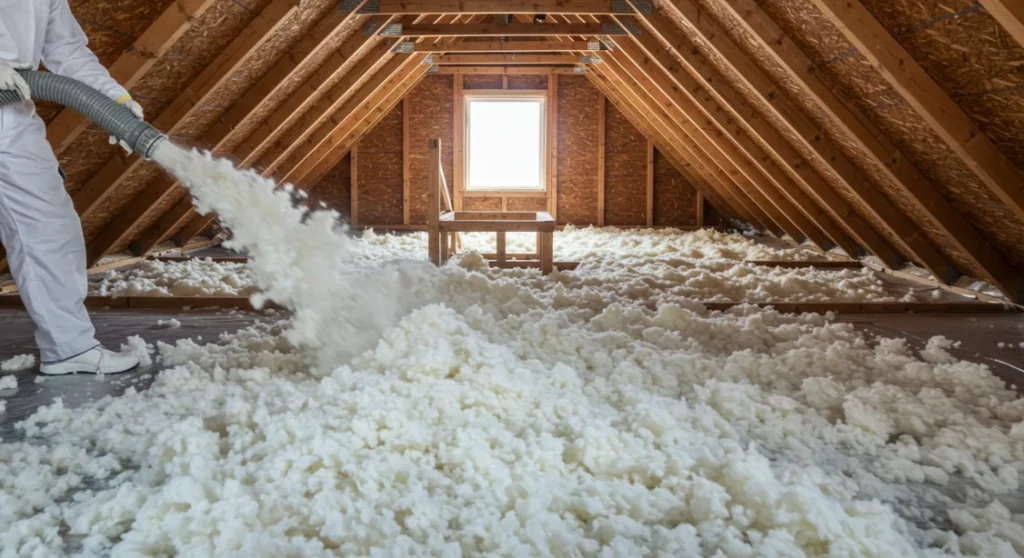
Choosing the right material involves understanding specific characteristics of each insulation type. High Country Solutions frequently works with three primary options, each offering distinct health and safety profiles for different applications and budgets.
Cellulose insulation consists primarily of recycled paper products treated with borate compounds. These treatments provide fire resistance, mold prevention, and pest control without introducing harmful chemicals into the home. The material’s density helps it resist settling and maintain its protective properties over time. Installation requires specialized equipment to achieve proper coverage and density, which professionals can verify through quality control measurements.
Fiberglass insulation has evolved significantly from earlier versions that raised concerns about airborne fibers and formaldehyde emissions. Modern products use formaldehyde-free binders and fibers designed to reduce skin irritation during installation. While not as effective as cellulose for fire resistance, fiberglass still meets Class 1 fire standards when properly installed. Its moisture resistance makes it suitable for damp environments where cellulose might be problematic.
Mineral wool, sometimes called rock wool, offers superior fire resistance and moisture management. Made from molten rock or industrial slag spun into fibers, this material naturally resists mold and doesn’t provide food for pests. Although typically more expensive than other options, mineral wool’s durability and fire protection make it valuable for specific applications, especially in fire-prone areas or where maximum safety is required.
Before choosing blown-in insulation, several practical factors influence the best option for your situation. The existing structure’s condition plays a crucial role homes with moisture issues or poor ventilation may benefit more from moisture-resistant materials like mineral wool. Similarly, older homes with knob-and-tube wiring require careful evaluation to ensure insulation doesn’t create fire hazards.
The installation process itself affects long-term performance and safety. Professional installers understand how to achieve the correct density measured in pounds per cubic foot different for walls versus attics. They also know how to protect electrical fixtures, create proper ventilation channels, and prevent insulation from contacting chimneys or flues where fire risk exists.
Climate considerations significantly impact material choice. Cold climates benefit from cellulose’s superior air-sealing properties, while humid regions might prioritize mineral wool or fiberglass for their moisture resistance. The National Insulation Association provides climate-specific guidance that helps match insulation types to local conditions.
Budget constraints inevitably factor into decisions, but one should consider long-term health impacts rather than just upfront costs. Materials with better fire ratings or mold resistance may cost more initially, but prevent expensive remediation later. Professional installation, though adding to initial expense, ensures proper coverage and avoids performance issues that compromise health benefits.
The health and safety benefits of modern blown-in insulation make it a valuable investment for any home. Fire resistance, moisture management, air quality improvement, and noise reduction all contribute to a healthier living environment while also enhancing energy efficiency. The key is selecting the appropriate material for your specific situation and ensuring professional installation that meets building codes and manufacturer specifications.
Evaluate your home’s current condition, climate challenges, and budget constraints when choosing insulation options. Consider consulting with insulation professionals who can assess your specific needs and recommend the most appropriate solution for long-term health and safety benefits.
For homeowners interested in exploring blown-in insulation options, High Country Solutions offers professional assessments to determine the best solution for your specific situation. Contact the team at [email protected] or call (307) 248-9063 to schedule a consultation and learn how modern insulation can protect your family’s health while improving comfort and energy efficiency.
Once properly installed, blown-in insulation needs virtually no maintenance. Occasional inspection for moisture intrusion or pest activity ensures continued performance. Attics should be properly ventilated to prevent condensation.
Most modern blown-in insulation products contain significant recycled content—cellulose uses 85% recycled paper, while many fiberglass products incorporate 30-50% recycled glass. The energy savings over the insulation’s lifespan far outweigh the environmental impact of production and installation.
Professional crews typically complete most residential projects in one day. Attic insulation often takes 4-6 hours, while wall insulation through drilled holes might require 6-8 hours, depending on home size and accessibility.
Yes, moisture-resistant varieties like mineral wool and properly treated cellulose help manage humidity by preventing condensation and moisture accumulation in wall cavities. However, adequate ventilation remains essential for complete humidity control.