Why ventilation is a critical partner to your insulation system in Idaho Falls, ID
Ventilation and insulation work as an essential team in Idaho Falls homes, where insulation keeps heat in during winter and…


Have you ever noticed that some rooms in your house feel drafty while others are perfectly comfortable? Or perhaps your energy bills seem unusually high despite your best efforts to conserve energy? The culprit might be something called the stack effect, a phenomenon that silently robs homes of comfort and efficiency while driving up utility costs. This comprehensive guide will walk you through everything you need to know to solve this persistent problem using blown-in insulation, drawing on years of hands-on field experience.
The stack effect is a natural phenomenon that occurs in buildings, driven by differences in air density and temperature. Here’s how it works: warm air rises because it’s less dense than cool air. In winter, this means warm air escapes through the upper levels of your home while cold air is sucked in from below to replace it. The reverse happens in summer, though typically with less intensity.
This creates a continuous circulation pattern that:
The stack effect is particularly pronounced in multi-story homes, but it affects single-story houses too, especially those with high ceilings or attached garages. The pressure differences can be significant enough that you might feel drafts around electrical outlets, windows, and doors on the lower floor while upper floors lose heat rapidly.
Many homeowners assume that adding more insulation anywhere will solve their energy problems, but that’s not the case with the stack effect. Traditional insulation methods like batts and rolls primarily address conduction heat loss but do little to stop air movement.
Air leakage through gaps, cracks, and unsealed connections bypasses traditional insulation entirely. Think of it like wearing a wool sweater on a windy day – the wool keeps you warm, but the wind still gets through the gaps unless you have a windbreaker over it. In your home, air sealing is the windbreaker, and when combined with proper insulation, it creates an effective barrier against stack-effect losses.
This is where blown-in insulation shines. Not only does it provide excellent thermal resistance, but when properly installed, it can also significantly reduce air movement by filling gaps and creating a more complete air barrier.
When it comes to blown-in insulation, you have several options, each with distinct advantages for addressing stack effect:
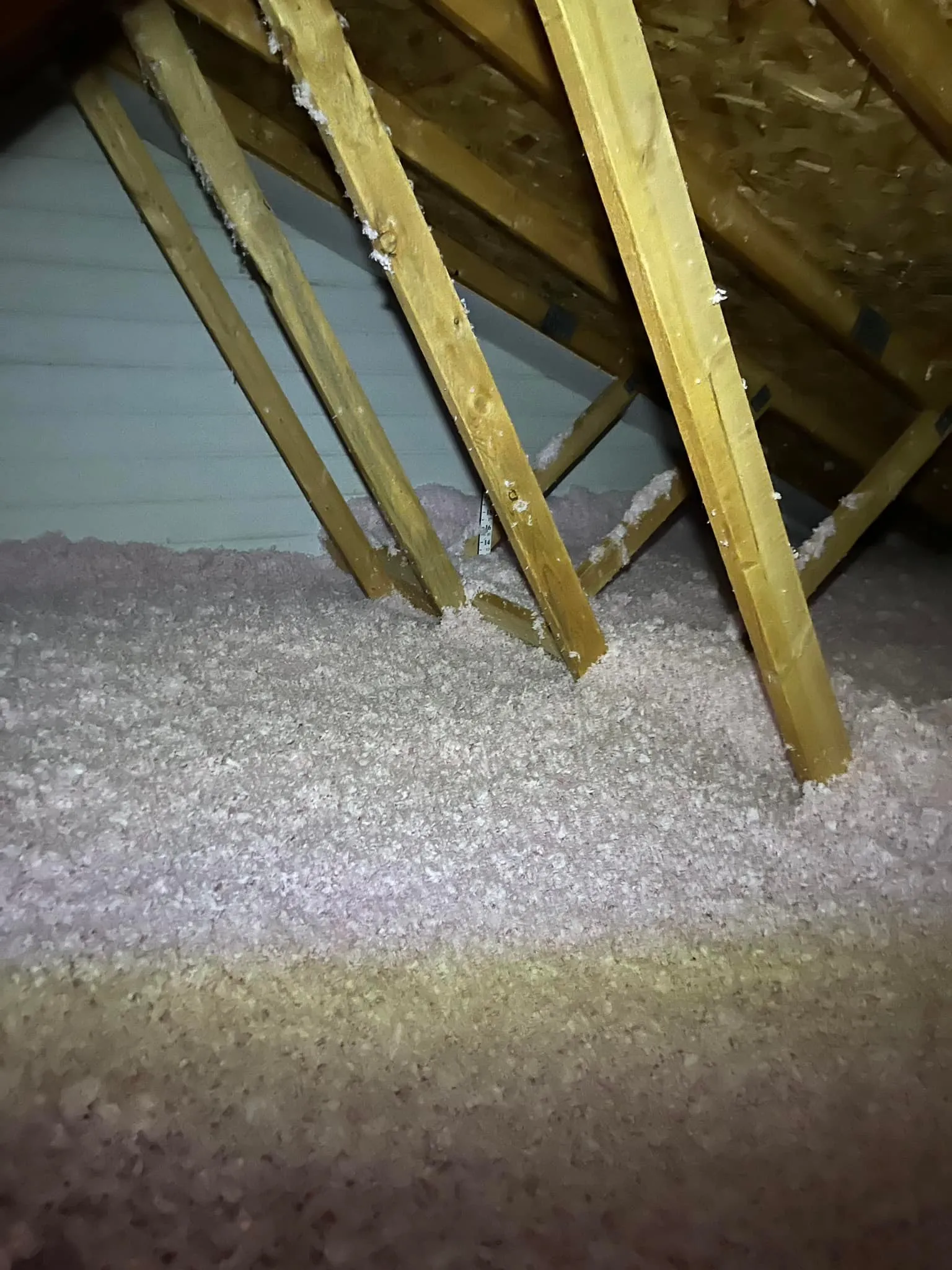
Made primarily from recycled paper products treated with fire retardants, cellulose is dense enough to provide good air sealing properties. It’s particularly effective at reducing air movement when installed at proper densities.
Pros:
Cons:
Fiberglass loose-fill insulation has evolved significantly from the itchy pink material many remember. Modern products contain binders and sometimes acrylic adhesives that help it maintain position and resist air movement.
Pros:
Cons:
Also known as mineral wool, this material is made from natural rock and steel slag byproducts. It offers superior fire resistance and sound dampening alongside thermal performance.
Pros:
Cons:
Table: Comparison of Blown-in Insulation Types for Stack Effect
| Property | Cellulose | Fiberglass | Rock Wool |
|---|---|---|---|
| Air Sealing Quality | Good | Fair | Good |
| Settling Rate | 15-20% | 10-15% | Minimal |
| Cost per Square Foot | $ | $$ | $$$ |
| Fire Resistance | Treated, good | Fair | Excellent |
| Sound Damping | Good | Fair | Excellent |
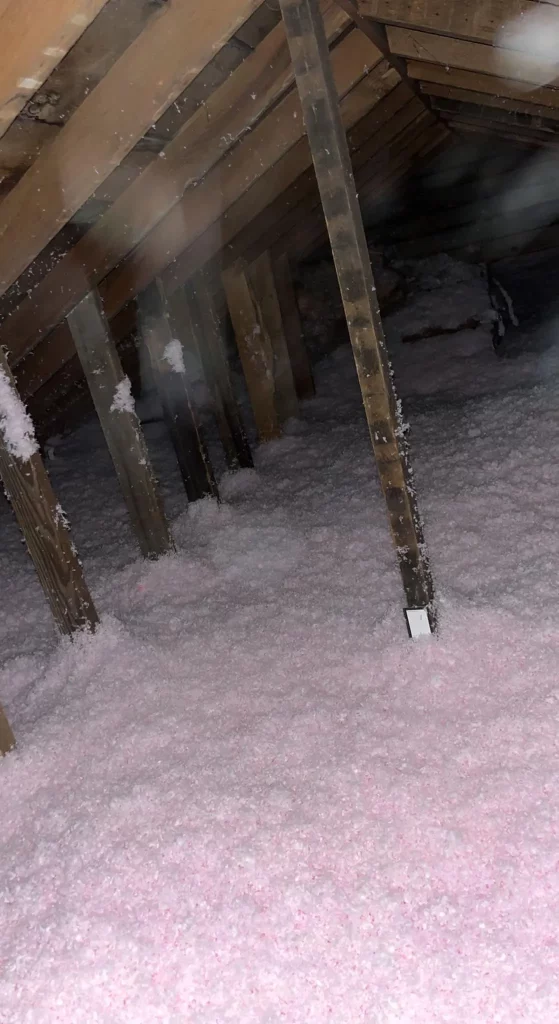
Proper installation is critical for effectiveness against the stack effect. Here’s a comprehensive approach:
Before adding any insulation, you need to identify the specific pathways contributing to stack effect in your home. This includes:
Expert Tip: Use a blower door test if possible. This professional diagnostic tool pressurizes your home to reveal air leakage pathways that might not be obvious during a visual inspection. Many utility companies offer rebates for energy audits that include this test.
Remember that insulation without air sealing is like trying to stay warm with holes in your sweater. Before blowing any insulation:
According to research from Lawrence Berkeley National Laboratory, proper air sealing can reduce a home’s heating and cooling needs by 15-25%, making it a critical first step.
Before installation begins:
Choose the right equipment for your insulation type:
Calculate your material needs carefully. Most homeowners underestimate the amount needed because they don’t account for settling or filling spaces completely. A general rule is to purchase about 15-20% more material than your square footage calculations suggest to account for waste and proper density.
Proper installation technique makes all the difference in fighting the stack effect:
Attic Floor Installation:
Wall Installation (Retrofit):
After installation:
Key Takeaways:
For those looking to optimize their approach beyond basic installation, these advanced techniques can significantly improve results:
Instead of just adding insulation to attic floors and wall cavities, consider continuous insulation systems that create unbroken thermal barriers:
Combining different insulation types can address multiple pathways of the stack effect:
Advanced solutions address the pressure differences that drive the stack effect:
Market data shows that homes implementing these advanced strategies see energy savings of 30-50% compared to baseline homes, according to studies by the U.S. Department of Energy.
How do you know if your stack effect solution is working? Here are concrete ways to measure effectiveness:
To determine if your investment was worthwhile:
ROI (%) = (Annual Savings × 100) ÷ Total Installation Cost
Most blown-in insulation projects pay for themselves within 3-7 years through energy savings alone, not including the comfort and health benefits.
Table: Typical ROI Scenarios for Stack Effect Solutions
| Home Size | Investment Level | Annual Savings Impact | Payback Period |
|---|---|---|---|
| 1,200 sq ft | Entry-Level | Modest | 3.5 – 9 years |
| 2,000 sq ft | Mid-Range | Moderate | 3.3 – 8.5 years |
| 3,000+ sq ft | High | Significant | 3.3 – 9 years |
Even with proper planning, you might encounter these common challenges:
Moisture can destroy insulation effectiveness and create health problems. Solutions include:
Achieving uniform coverage in complex spaces can be difficult:
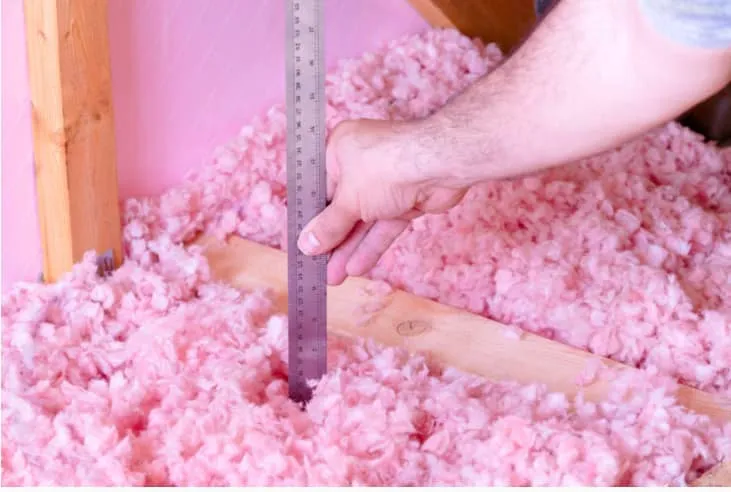
Some insulation materials settle, reducing R-value:
Expert Tip: High Country Solution often recommends dense-packing cellulose at 3.5-4.0 lbs/ft³ rather than standard applications. This higher density reduces settling and improves air sealing, making it particularly effective against the stack effect.
Difficult-to-reach areas can compromise overall effectiveness:
Solving stack effect with blown-in insulation isn’t a quick fix, but a systematic approach to making your home more comfortable, efficient, and healthy. By understanding the science behind stack effect, choosing the right materials, and following proper installation techniques, you can address one of the biggest sources of energy loss in most homes.
Remember these key points:
This guide serves as your reference as you plan and implement your stack effect solution. Refer back to specific sections as needed, and don’t hesitate to seek professional help for complex situations.
While this guide provides comprehensive information for tackling stack effect issues, sometimes professional expertise is needed for complex situations or peace of mind. The team at High Country Solution offers personalized assessments and installation services to address stack effect problems using proven methods and quality materials. For expert guidance on your specific home, reach out to High Country Solution at [email protected] or call (307) 248-9063 to schedule a consultation and take the first step toward a more comfortable, efficient home.
While attic insulation is important, it alone won’t solve the stack effect. The stack effect is primarily driven by air leakage, so you must seal air pathways first. Insulation without air sealing is like wearing a thick sweater with holes – you’ll still feel drafts.
For most climates, the U.S. Department of Energy recommends R-49 to R-60 for attics in cold regions and R-30 to R-38 in warm regions. However, the quality of installation and air sealing often matters more than sheer quantity. A well-sealed R-38 system outperforms a poorly installed R-60 system.
Yes, generally speaking. Blown-in insulation fills gaps and voids that batt insulation can miss, and it conforms to irregular spaces better. This reduces air movement, which is crucial for addressing stack effect.
Modern homes benefit from careful air sealing and insulation, but they do need controlled ventilation. If you’re doing extensive air sealing work, consider installing mechanical ventilation like an HRV or ERV to maintain healthy indoor air quality.
When properly installed and protected from moisture, blown-in insulation can last the lifetime of your home. Some materials may settle slightly over time, which might require adding more material after many years to maintain effectiveness.
DIY installation is possible for accessible areas like attics, but requires special equipment rental and careful attention to safety and technique. For wall insulation or complex spaces, professional installation is recommended to ensure proper density and avoid problems.